Technology
How Combining Task Mining with RPA Can Help Banks Go Digital

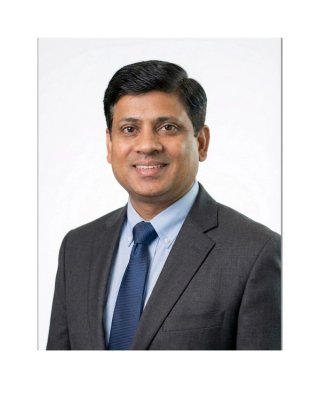
By Michal Franek, Chief Product Officer from UltimateSuite
Digitisation is not just transforming businesses; it is revolutionising them. From the way we buy items, to the way we book services, our methods of purchasing products and services have changed massively over the last decade. The financial services industry has not been immune to these changes, with the shift to mobile banking being a case in point as 74% of people in the UK now accessing services via their phones.
As banking activities become more digitised and mobile, and fewer people are visiting branches a new set of challenges have arisen for managers in the financial sector. This transformation can take different forms – from digital banking transactions to different types of payment methods – and internal banking processes are also impacted by this revolution.
Through technology advances banks – and by extension their customers – now have the tools to make robo-investment a reality, to automate the credit card application processing, account closure processes and much more. But we may wonder, what does the digital revolution look like for internal banking processes? What does the digitisation of these processes entail and what are the challenges faced?
From deploying software such as task mining and robotic process automation (RPA) to considering an overall strategy, the digitisation of banking processes is a niche of its own and is often overlooked.
The weight and cost of inefficient banking processes
In the banking sector, inefficient processes are, unfortunately, commonplace – and happen across the front and back office. Heavily rooted in procedure, banks are home to numerous repetitive processes that have over time proved themselves inefficient. These processes are costly and result in billions of dollars lost annually but most importantly, they require a company’s most precious asset – employee time.
Cashflow management, reporting, lending operations all have elements which are repetitive and dull for employees. So, what if team members could reduce the time spent on these tasks and instead focus on adding value elsewhere? Improving both the employee experience and by extension the customer experience.
Automation to unleash countless possibilities
Companies understand that their employee’s time could be better spent and want to target the core of these inefficiencies to free-up time and save costs. However, the question is how do they simplify complex processes and optimise workloads? How could they boost efficiency? The answer may lay in automation, but also in the elimination of tasks that fail to add value. While automation is certainly an effective solution, it is only one approach. Identifying tasks that serve as bottlenecks or that would be more effective if mechanised allows banks to make the most of efficiencies.
Nonetheless for many across the banking industry automation is the goal. It allows processes to occur with little or no human intervention. This is the perfect solution to repetitive tasks, automating workflows which results in scalability, greater efficiency, reduced errors and cost savings.
As a result, optimisation of tasks through automation can generate an improved employee experience. It is already making the lives of staff at many organisations simpler through increased accuracy, efficiency as well as collaboration which results in freeing up their time for more strategic and value-added tasks such as analysis and advising on key strategic and financial decisions. In the end, automation of banking processes benefits the overall business through the culmination of time saving, increased productivity, cost reduction and end-user satisfaction.
Indeed, faster processes means faster services which positively impacts the level of customer service being delivered to the end-user.
What’s task mining got to do with it?
With that said, automation is not the end-all-be-all solution to long banking processes. You can’t “just automate it”. Knowing what to automate and how to automate it is the keystone of operational excellence. This requires insight into the scope of the work and a detailed understanding of how actions are being executed – it is also where task mining comes into play.
Task mining is a technology that captures data of daily activities, analysing and then identifying how to optimize them by streamlining the steps or automating them completely. Task mining identifies inefficiencies in the way that tasks are undertaken, looking at software applications or system issues which have been overlooked. It takes a deep dive into current operations, a provides a critical step in automation since it collects, identifies, and allows automation and process improvements on an organizational scale.
For example, after just one month of data collection through task mining, international professional services firm Mazars identified opportunities for optimisation resulting in up to 30% cost savings in a specific department.
By deploying task mining and RPA, organizations can boost efficiency and productivity while also reducing costs. Freeing up employee time eliminates frustrations associated with complex and slow processes and streamlines banking processes to deliver on the digital revolution promise.
Let’s use RPA to send in the robots
Financial organisations are already seeing the benefits of optimisation through automation and there has been widespread adoption of bots created using Robotic Process Automation (RPA). However, while this starts to become more commonplace, the key question is where to deploy this technology? And once it’s in place, how do you measure its success? To effectively identify the role of RPA and measure its success, task mining has a critical role to play in the identification of processes and more specifically, tasks which can be eliminated, automated or optimised.
Blindly automating faulty processes makes no sense and won’t generate ROI or optimise workflows. Instead, applying a thoughtful strategy combining RPA with task mining will unlock workflow optimisation. Combining task data and process insights with RPA will streamline long and complex processes that are, let’s face it, overdue a review. Overhauling these processes will be the sweet spot for banks trying to keep pace in a disruptive landscape.
Digitisation refers to the process of converting information into a digital format, transforming traditional processes into digital ones to enhance efficiency and accessibility.
Robotic Process Automation (RPA) is a technology that uses software robots to automate repetitive tasks, improving efficiency and accuracy in business processes.
Task mining is a technology that analyzes user interactions with software to identify inefficiencies and optimize workflows, providing insights for automation.
Banking processes are the series of operations and tasks that banks perform to manage customer accounts, transactions, and services effectively.
Automation in banking involves using technology to perform tasks without human intervention, streamlining operations and reducing errors.
Explore more articles in the Technology category