Search
00
GBAF Logo
trophy
Top StoriesInterviewsBusinessFinanceBankingTechnologyInvestingTradingVideosAwardsMagazinesHeadlinesTrends

Subscribe to our newsletter

Get the latest news and updates from our team.

Global Banking and Finance Review

Global Banking & Finance Review

Company

    GBAF Logo
    • About Us
    • Profile
    • Privacy & Cookie Policy
    • Terms of Use
    • Contact Us
    • Advertising
    • Submit Post
    • Latest News
    • Research Reports
    • Press Release
    • Awards▾
      • About the Awards
      • Awards TimeTable
      • Submit Nominations
      • Testimonials
      • Media Room
      • Award Winners
      • FAQ
    • Magazines▾
      • Global Banking & Finance Review Magazine Issue 79
      • Global Banking & Finance Review Magazine Issue 78
      • Global Banking & Finance Review Magazine Issue 77
      • Global Banking & Finance Review Magazine Issue 76
      • Global Banking & Finance Review Magazine Issue 75
      • Global Banking & Finance Review Magazine Issue 73
      • Global Banking & Finance Review Magazine Issue 71
      • Global Banking & Finance Review Magazine Issue 70
      • Global Banking & Finance Review Magazine Issue 69
      • Global Banking & Finance Review Magazine Issue 66
    Top StoriesInterviewsBusinessFinanceBankingTechnologyInvestingTradingVideosAwardsMagazinesHeadlinesTrends

    Global Banking & Finance Review® is a leading financial portal and online magazine offering News, Analysis, Opinion, Reviews, Interviews & Videos from the world of Banking, Finance, Business, Trading, Technology, Investing, Brokerage, Foreign Exchange, Tax & Legal, Islamic Finance, Asset & Wealth Management.
    Copyright © 2010-2025 GBAF Publications Ltd - All Rights Reserved.

    Editorial & Advertiser disclosure

    Global Banking and Finance Review is an online platform offering news, analysis, and opinion on the latest trends, developments, and innovations in the banking and finance industry worldwide. The platform covers a diverse range of topics, including banking, insurance, investment, wealth management, fintech, and regulatory issues. The website publishes news, press releases, opinion and advertorials on various financial organizations, products and services which are commissioned from various Companies, Organizations, PR agencies, Bloggers etc. These commissioned articles are commercial in nature. This is not to be considered as financial advice and should be considered only for information purposes. It does not reflect the views or opinion of our website and is not to be considered an endorsement or a recommendation. We cannot guarantee the accuracy or applicability of any information provided with respect to your individual or personal circumstances. Please seek Professional advice from a qualified professional before making any financial decisions. We link to various third-party websites, affiliate sales networks, and to our advertising partners websites. When you view or click on certain links available on our articles, our partners may compensate us for displaying the content to you or make a purchase or fill a form. This will not incur any additional charges to you. To make things simpler for you to identity or distinguish advertised or sponsored articles or links, you may consider all articles or links hosted on our site as a commercial article placement. We will not be responsible for any loss you may suffer as a result of any omission or inaccuracy on the website.

    Home > Finance > How and why are EU economies digitising VAT collection?
    Finance

    How and why are EU economies digitising VAT collection?

    How and why are EU economies digitising VAT collection?

    Published by Jessica Weisman-Pitts

    Posted on October 19, 2022

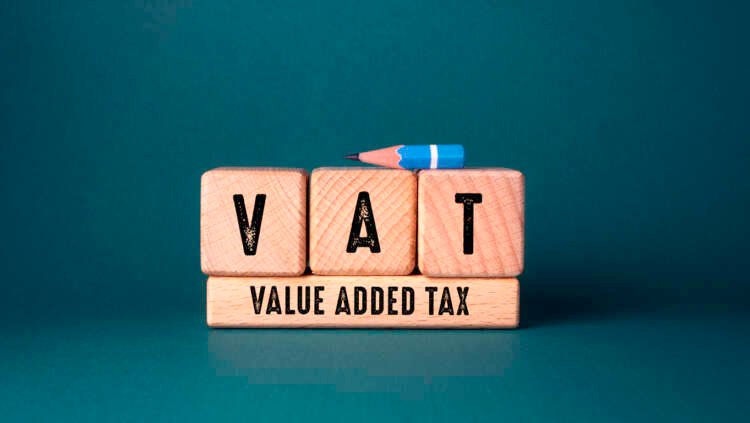
    Featured image for article about Finance

    By Christiaan Van Der Valk, VP of Strategy and Regulatory at Sovos

    Traditionally, indirect taxes like VAT require businesses to play the role of tax collector, interpreting and following complex rules around the applicability and rate of taxation. This inevitably leads to gaps between expected revenue and actual revenue collected – be it due to honest mistakes or intentional tax evasion. For instance, the latest data available show the EU’s current VAT gap sits at around 11%.

    For decades, complex, time-consuming audits were governments’ key tool for closing the VAT gap. But across Europe, we’re now seeing the sweeping digitisation of VAT collection, significantly enhancing authorities’ visibility into the transactions happening on their turf. This completely changes how businesses – especially those which operate across multiple jurisdictions – must approach internal VAT reporting processes and structures.

    Let’s look at two methods EU tax authorities are using to digitise VAT – and examine how they’re affecting multinational businesses.

    CTCs – the rise of real-time transaction reporting

    CTCs (continuous transaction controls) require businesses to submit transactional data in (near) real-time to a digital platform designed by their local tax administration. CTCs are nothing new. In fact, they originated in Latin America back in the early 2000s and have long been widespread across the continent. European adoption of CTCs has been much more gradual, due in part to pre-existing tax enforcement infrastructure and e-audit advances.

    Recently however, we’ve seen a significant uptick in the rollout of CTCs across the EU. Italy and Spain have led the way, with Poland and France also recently embarking on their own CTC journey. It’s worth noting that there’s no standard European model for this. EU rules dictate that each tax authority can set up its own regime, so these tend to vary significantly by country. However, the basic three step principle stays the same:

    1. Suppliers send an invoice in a specified format to tax authorities or licensed state agents. This typically includes a form of supplier authentication, as well as integrity controls on the invoice data. The tax administration may either return an approval code, or simply send the invoice to the buyer.
    2. The invoice is sent to the buyer using a method required or allowed by law.
    3. On receiving the invoice from the supplier, the buyer typically conducts a final compliance check with the tax authority. If the tax administration platform sends the invoice to the buyer, formal compliance of the invoice is implicit.

    Looking forward, we can expect CTCs to quickly become the norm across Eastern and Southern Europe. However, adoption will likely be slower in Northern Europe. It’s expected that the roadmap for CTCs will become clearer after the European Commission publishes its recommendations following its VAT in the Digital Age initiative.

    Europe’s SAF-T renaissance – powered by big data

    SAF-T (Standard Audit File for Tax) is an international standard for the electronic export and auditing of tax accounting data in a standard format. Much like CTCs, it’s also nothing new. The OECD’s Committee on Fiscal Affairs first created SAF-T way back in 2005, allowing governments to freely adapt it to suit audit systems, or use it as a basis for prefilling tax declarations.

    What warrants the inclusion of SAF-T in this list is that we’re now seeing more European countries implementing the standard – Romania and Hungary in 2022, and potentially Ukraine in 2023.

    SAF-T enhances how tax administrations audit for both direct and indirect taxes. In a nutshell, this means tax authorities no longer need to physically visit businesses to extract and interpret wide-ranging corporate data. Instead, businesses will send them a standard machine-exploitable format with detailed transaction information. It’s worth noting that data format and the method of data disclosure varies by jurisdiction.

    The emergence of AI and ‘big data’ technologies have likely catalysed this recent SAF-T renaissance in Europe. It’s now significantly easier for tax authorities to ‘digest’ enormous quantities of transaction data and spot any suspicious patterns.

    What do these trends mean for multinational businesses?

    In times of economic turbulence, VAT digitisation is a no-brainer. Firstly, it enables governments to raise more tax revenue by closing the VAT gap. One area of focus for EU tax authorities is supply chain VAT, which is particularly prone to both errors and fraud. Within the EU, VAT is paid on goods and services supplied, as well as the intra-community acquisition of goods and import of goods. Applied correctly, it should be cost neutral for most businesses. However, too many multinational businesses overlook the impact of indirect taxes like VAT when building out their global supply chains, leading to unnecessary confusion which may soon be penalised.

    Secondly, digital VAT reforms enable authorities to benefit from granular, up-to-the-minute economic data. This data is gold dust and can provide better models on the impact of fiscal or monetary policy interventions, which we’re likely to see more of as EU economies grapple with inflation and rising energy prices.

    To prepare themselves for the inevitable and ensure resilience, multinational businesses should start working to digitise internal processes and structures around tax compliance and reporting. Within this, they must also consider VAT compliance when building their supply chain strategy. Those who fail to act now risk potential operational disruption and cashflow issues further down the line.

    Related Posts
    UK financial watchdog to investigate travel retailer WH Smith
    UK financial watchdog to investigate travel retailer WH Smith
    Presses fall silent after mobs torch offices of Bangladesh's top newspapers
    Presses fall silent after mobs torch offices of Bangladesh's top newspapers
    Ukraine can advise Poland on drone defence, Zelenskiy says in Warsaw
    Ukraine can advise Poland on drone defence, Zelenskiy says in Warsaw
    French government calls for Christmas truce in farmer protests
    French government calls for Christmas truce in farmer protests
    Renault escapes 'junk' bond rating after S&P upgrade
    Renault escapes 'junk' bond rating after S&P upgrade
    ECB's growth, inflation risks are large but balanced, Sleijpen says
    ECB's growth, inflation risks are large but balanced, Sleijpen says
    Italy's BPER strikes deal with unions on 800 voluntary exits, 650 hires
    Italy's BPER strikes deal with unions on 800 voluntary exits, 650 hires
    ECB policymakers not yet ready to take rate cut off the table
    ECB policymakers not yet ready to take rate cut off the table
    ECB's Santos Pereira: inflation at target, rate moves to hinge on economy
    ECB's Santos Pereira: inflation at target, rate moves to hinge on economy
    Rogue texts, aliens and a marriage proposal - welcome to Vladimir Putin's phone-in
    Rogue texts, aliens and a marriage proposal - welcome to Vladimir Putin's phone-in
    Exclusive-Nexperia's China unit switches to local firms for wafer supplies- document
    Exclusive-Nexperia's China unit switches to local firms for wafer supplies- document
    Germany headed for biggest deficit since reunification, Bundesbank says
    Germany headed for biggest deficit since reunification, Bundesbank says

    Why waste money on news and opinions when you can access them for free?

    Take advantage of our newsletter subscription and stay informed on the go!

    Subscribe

    Previous Finance PostLessons for the CFO: Managing finances and the workforce this winter
    Next Finance PostFinancial services has a role to play to deliver the ‘Levelling Up’ agenda

    More from Finance

    Explore more articles in the Finance category

    UK retailers report fall in sales ahead of Christmas, CBI says

    UK retailers report fall in sales ahead of Christmas, CBI says

    A Santa rally? Investors hope for year-end gains to cap strong 2025

    A Santa rally? Investors hope for year-end gains to cap strong 2025

    S&P 500, Nasdaq futures inch up on tech rebound, Nike slumps on China pain

    S&P 500, Nasdaq futures inch up on tech rebound, Nike slumps on China pain

    French authorities set new conditions on Nestle's Perrier production

    French authorities set new conditions on Nestle's Perrier production

    Prince Harry and Meghan to revamp Archewell charitable arm

    Prince Harry and Meghan to revamp Archewell charitable arm

    Gaza no longer in famine after aid access improves, hunger monitor says

    Gaza no longer in famine after aid access improves, hunger monitor says

    Ukraine clinches deal to restructure $2.6 billion in 'toxic' GDP warrants

    Ukraine clinches deal to restructure $2.6 billion in 'toxic' GDP warrants

    UK welcomes EU funding agreement for Ukraine

    UK welcomes EU funding agreement for Ukraine

    Canton Zurich urges government to soften UBS capital requirements plan

    Canton Zurich urges government to soften UBS capital requirements plan

    Ukraine hits Russian 'shadow fleet' tanker in Mediterranean

    Ukraine hits Russian 'shadow fleet' tanker in Mediterranean

    Explainer-How the EU's $105 billion loan to Ukraine will work without frozen Russian assets?

    Explainer-How the EU's $105 billion loan to Ukraine will work without frozen Russian assets?

    UK imposes sanctions on perpetrators of violence against Syrian civilians

    UK imposes sanctions on perpetrators of violence against Syrian civilians

    View All Finance Posts