Search
00
GBAF Logo
trophy
Top StoriesInterviewsBusinessFinanceBankingTechnologyInvestingTradingVideosAwardsMagazinesHeadlinesTrends

Subscribe to our newsletter

Get the latest news and updates from our team.

Global Banking & Finance Review®

Global Banking & Finance Review® - Subscribe to our newsletter

Company

    GBAF Logo
    • About Us
    • Profile
    • Privacy & Cookie Policy
    • Terms of Use
    • Contact Us
    • Advertising
    • Submit Post
    • Latest News
    • Research Reports
    • Press Release
    • Awards▾
      • About the Awards
      • Awards TimeTable
      • Submit Nominations
      • Testimonials
      • Media Room
      • Award Winners
      • FAQ
    • Magazines▾
      • Global Banking & Finance Review Magazine Issue 79
      • Global Banking & Finance Review Magazine Issue 78
      • Global Banking & Finance Review Magazine Issue 77
      • Global Banking & Finance Review Magazine Issue 76
      • Global Banking & Finance Review Magazine Issue 75
      • Global Banking & Finance Review Magazine Issue 73
      • Global Banking & Finance Review Magazine Issue 71
      • Global Banking & Finance Review Magazine Issue 70
      • Global Banking & Finance Review Magazine Issue 69
      • Global Banking & Finance Review Magazine Issue 66
    Top StoriesInterviewsBusinessFinanceBankingTechnologyInvestingTradingVideosAwardsMagazinesHeadlinesTrends

    Global Banking & Finance Review® is a leading financial portal and online magazine offering News, Analysis, Opinion, Reviews, Interviews & Videos from the world of Banking, Finance, Business, Trading, Technology, Investing, Brokerage, Foreign Exchange, Tax & Legal, Islamic Finance, Asset & Wealth Management.
    Copyright © 2010-2026 GBAF Publications Ltd - All Rights Reserved. | Sitemap | Tags | Developed By eCorpIT

    Editorial & Advertiser disclosure

    Global Banking & Finance Review® is an online platform offering news, analysis, and opinion on the latest trends, developments, and innovations in the banking and finance industry worldwide. The platform covers a diverse range of topics, including banking, insurance, investment, wealth management, fintech, and regulatory issues. The website publishes news, press releases, opinion and advertorials on various financial organizations, products and services which are commissioned from various Companies, Organizations, PR agencies, Bloggers etc. These commissioned articles are commercial in nature. This is not to be considered as financial advice and should be considered only for information purposes. It does not reflect the views or opinion of our website and is not to be considered an endorsement or a recommendation. We cannot guarantee the accuracy or applicability of any information provided with respect to your individual or personal circumstances. Please seek Professional advice from a qualified professional before making any financial decisions. We link to various third-party websites, affiliate sales networks, and to our advertising partners websites. When you view or click on certain links available on our articles, our partners may compensate us for displaying the content to you or make a purchase or fill a form. This will not incur any additional charges to you. To make things simpler for you to identity or distinguish advertised or sponsored articles or links, you may consider all articles or links hosted on our site as a commercial article placement. We will not be responsible for any loss you may suffer as a result of any omission or inaccuracy on the website.

    Home > Investing > Turnaround time: private equity could be crucial to sub-Saharan Africa’s economic resurgence
    Investing

    Turnaround time: private equity could be crucial to sub-Saharan Africa’s economic resurgence

    Published by Wanda Rich

    Posted on May 22, 2023

    4 min read

    Last updated: February 1, 2026

    The vibrant skyline of Lagos, Nigeria, symbolizes the economic opportunities in sub-Saharan Africa. As private equity becomes crucial for recovery, this image reflects the region's potential for growth amidst economic challenges.
    Lagos cityscape highlighting economic potential in sub-Saharan Africa - Global Banking & Finance Review
    Why waste money on news and opinion when you can access them for free?

    Take advantage of our newsletter subscription and stay informed on the go!

    Subscribe

    Tags:GDPeconomic growthprivate equityinvestmentfinancial crisis

    Table of Contents

    • Helping companies survive, then thrive
    • The right PE partners
    • Unity of purpose

    Turnaround time: private equity could be crucial to sub-Saharan Africa’s economic resurgence

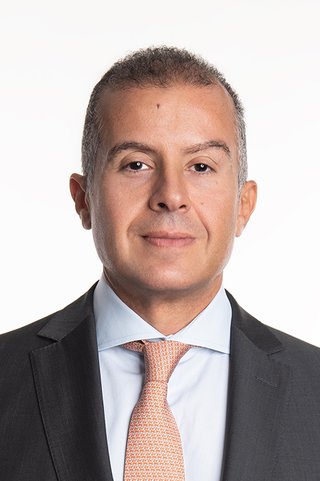
    Bryan Turner

    By Bryan Turner, Partner, Spear Capital

    Let’s not try and gloss over reality. The global economy has had a tough few years. A global pandemic was followed by supply chain disruptions (exacerbated by Russia’s war in Ukraine), which was then followed by rampant inflation, rises in energy costs, and increasingly high-interest rates that have suddenly made everyone’s debt a lot more expensive. Few regions, however, have felt the impact of those economic ructions to the degree that countries in sub-Saharan Africa have.

    In fact, the pandemic drove reductions in gross domestic product (GDP) across the region as well as depressed formal and informal economic activity and increased unemployment and increases in extreme poverty. And in 2022, inflation for the region hit 14.47%, a rate it last came close to in 2001. Economic growth, meanwhile, fell to 3.6% in 2022, down from 4.1% in 2021.

    It’s a far cry from the heady days of The Economist’s iconic “Africa Rising” cover of December 2011. But it’s also true that governments and businesses across the region are looking beyond the current crisis and towards an eventual resurgence. As they do so, it’s vital that they consider the role private equity could play in that resurgence.

    Helping companies survive, then thrive

    With the current global economic crisis piling on top of domestic economic issues, many countries are seeing a growing number of businesses that are either in distress or on the verge of closure. Many others have already been forced to close. In South Africa, for example, company liquidations in December 2022 were up 30.3% year-on-year.

    Those companies that were forced into liquidation weren’t necessarily bad companies either. Far from it. In all likelihood, they lacked a combination of capital and the expertise needed to get through a period of economic volatility. The same is true of companies on the verge of closure.

    That’s where private equity firms come into play. The right private equity firm can help a promising company in even the most difficult of economies survive and then thrive. That’s not just something I believe either. It’s something we’ve managed to achieve a number of times with our own portfolio companies. There are also others out there that are committed to helping African companies reach their full potential.

    As sub-Saharan Africa prepares for an economic resurgence, private equity firms could prove crucial in ensuring that businesses are in the best possible position to bounce back and even fuel further growth.

    The right PE partners

    The key, however, is to attract and find the right private equity firms. You don’t have to be an industry insider to know that some firms have a reputation for buying out a distressed company, stripping it of its assets, and selling them off for a tidy profit.

    Those aren’t the kinds of private equity firms you want in the region right now (or ever, really). You want firms that see the potential in portfolio companies and take a ‘boots-on-the-ground’ approach to investing. More than that, you want firms that use African expertise to help their portfolio companies achieve their full potential.

    That’s because it’s those firms that recognise that all the factors which made Africa so attractive in 2011 (a young, increasingly well-educated population, growing levels of connectivity, and rapid urbanisation) are still in place. Once the current global economic crisis reaches its endpoint, those factors will really come into play again.

    It’s also worth noting that those kinds of private equity firms are also less likely to be spooked by rising interest rates and will continue investing in the region, regardless.

    Unity of purpose

    But if private equity investors are to play that role to full effect, then players from across the economic value chain must come together and work with unity of purpose. In addition to the investors themselves, governments need to create conditions that incentivise the right kinds of investments and educate businesses on what types of investments are available. Regional business bodies, meanwhile, need to promote the businesses in their region to investors. And the businesses themselves need to be receptive to the suggestions of their investors.

    I have no doubt that sub-Saharan Africa can, and will, experience an economic resurgence. But in order for that resurgence to be something that can be built on and that benefits people across the region, a lot of players are going to have to come together and work in the same direction. Private equity can’t create that resurgence on its own but it will be crucial to it.

    Frequently Asked Questions about Turnaround time: private equity could be crucial to sub-Saharan Africa’s economic resurgence

    1What is private equity?

    Private equity refers to investment funds that buy and restructure companies not listed on public exchanges, aiming to improve their financial performance and eventually sell them for a profit.

    2What is inflation?

    Inflation is the rate at which the general level of prices for goods and services rises, eroding purchasing power, and is often measured by the Consumer Price Index (CPI).

    3What is economic growth?

    Economic growth is an increase in the production of goods and services in an economy over a period, typically measured as the percentage increase in real GDP.

    4What is a financial crisis?

    A financial crisis is a situation where the value of financial institutions or assets drops rapidly, often leading to widespread economic instability and loss of consumer confidence.

    More from Investing

    Explore more articles in the Investing category

    Image for Understanding the Factors Shaping Bitcoin’s Current Market Conditions
    Understanding the Factors Shaping Bitcoin’s Current Market Conditions
    Image for Understanding Investment Management Consulting Services in the U.S. Market
    Understanding Investment Management Consulting Services in the U.S. Market
    Image for The Role of DST Sponsors and Service Providers in Delaware Statutory Trusts
    The Role of DST Sponsors and Service Providers in Delaware Statutory Trusts
    Image for Understanding Self-Directed IRA Structures and Platform Models
    Understanding Self-Directed IRA Structures and Platform Models
    Image for 1031 Exchanges and Delaware Statutory Trusts: What Investors Need to Know
    1031 Exchanges and Delaware Statutory Trusts: What Investors Need to Know
    Image for Excellence in Innovation – Strategic Investment & Economic Transformation Egypt 2025
    Excellence in Innovation – Strategic Investment & Economic Transformation Egypt 2025
    Image for What Is the Average Pension Pot in the UK? (By Age)
    What Is the Average Pension Pot in the UK? (By Age)
    Image for From Money Printing to Market Surge: The Macro Forces Driving Crypto in 2026
    From Money Printing to Market Surge: The Macro Forces Driving Crypto in 2026
    Image for  Millennials Aren’t Ignoring Retirement. They’re Rebuilding It.
    Millennials Aren’t Ignoring Retirement. They’re Rebuilding It.
    Image for BridgeWise Launches FixedWise, the First AI Solution Bringing Granular Bond Intelligence to the European Market
    BridgeWise Launches FixedWise, the First AI Solution Bringing Granular Bond Intelligence to the European Market
    Image for Why Financial Advisors Are Rethinking Gold Allocations
    Why Financial Advisors Are Rethinking Gold Allocations
    Image for From Opaque to Investable: Yaniv Bertele's Blueprint for Transparent Alternatives
    From Opaque to Investable: Yaniv Bertele's Blueprint for Transparent Alternatives
    View All Investing Posts
    Previous Investing PostThe Risks and Rewards of Investing in IPOs: Maximizing Potential While Mitigating Risks
    Next Investing PostWealth Creation: Strategies for Building Long-Term Wealth