
Search
00
GBAF Logo
trophy
Top StoriesInterviewsBusinessFinanceBankingTechnologyInvestingTradingVideosAwardsMagazinesHeadlinesTrends

Subscribe to our newsletter

Get the latest news and updates from our team.

Global Banking & Finance Review®

Global Banking & Finance Review® - Subscribe to our newsletter

Company

    GBAF Logo
    • About Us
    • Profile
    • Privacy & Cookie Policy
    • Terms of Use
    • Contact Us
    • Advertising
    • Submit Post
    • Latest News
    • Research Reports
    • Press Release
    • Awards▾
      • About the Awards
      • Awards TimeTable
      • Submit Nominations
      • Testimonials
      • Media Room
      • Award Winners
      • FAQ
    • Magazines▾
      • Global Banking & Finance Review Magazine Issue 79
      • Global Banking & Finance Review Magazine Issue 78
      • Global Banking & Finance Review Magazine Issue 77
      • Global Banking & Finance Review Magazine Issue 76
      • Global Banking & Finance Review Magazine Issue 75
      • Global Banking & Finance Review Magazine Issue 73
      • Global Banking & Finance Review Magazine Issue 71
      • Global Banking & Finance Review Magazine Issue 70
      • Global Banking & Finance Review Magazine Issue 69
      • Global Banking & Finance Review Magazine Issue 66
    Top StoriesInterviewsBusinessFinanceBankingTechnologyInvestingTradingVideosAwardsMagazinesHeadlinesTrends

    Global Banking & Finance Review® is a leading financial portal and online magazine offering News, Analysis, Opinion, Reviews, Interviews & Videos from the world of Banking, Finance, Business, Trading, Technology, Investing, Brokerage, Foreign Exchange, Tax & Legal, Islamic Finance, Asset & Wealth Management.
    Copyright © 2010-2026 GBAF Publications Ltd - All Rights Reserved. | Sitemap | Tags | Developed By eCorpIT

    Editorial & Advertiser disclosure

    Global Banking & Finance Review® is an online platform offering news, analysis, and opinion on the latest trends, developments, and innovations in the banking and finance industry worldwide. The platform covers a diverse range of topics, including banking, insurance, investment, wealth management, fintech, and regulatory issues. The website publishes news, press releases, opinion and advertorials on various financial organizations, products and services which are commissioned from various Companies, Organizations, PR agencies, Bloggers etc. These commissioned articles are commercial in nature. This is not to be considered as financial advice and should be considered only for information purposes. It does not reflect the views or opinion of our website and is not to be considered an endorsement or a recommendation. We cannot guarantee the accuracy or applicability of any information provided with respect to your individual or personal circumstances. Please seek Professional advice from a qualified professional before making any financial decisions. We link to various third-party websites, affiliate sales networks, and to our advertising partners websites. When you view or click on certain links available on our articles, our partners may compensate us for displaying the content to you or make a purchase or fill a form. This will not incur any additional charges to you. To make things simpler for you to identity or distinguish advertised or sponsored articles or links, you may consider all articles or links hosted on our site as a commercial article placement. We will not be responsible for any loss you may suffer as a result of any omission or inaccuracy on the website.

    Home > Investing > Oil eases as weak Asian data, more lockdowns dampen demand hopes
    Investing

    Oil eases as weak Asian data, more lockdowns dampen demand hopes
    Published by Jessica Weisman-Pitts

    Posted on August 17, 2021

    5 min read

    Last updated: January 21, 2026

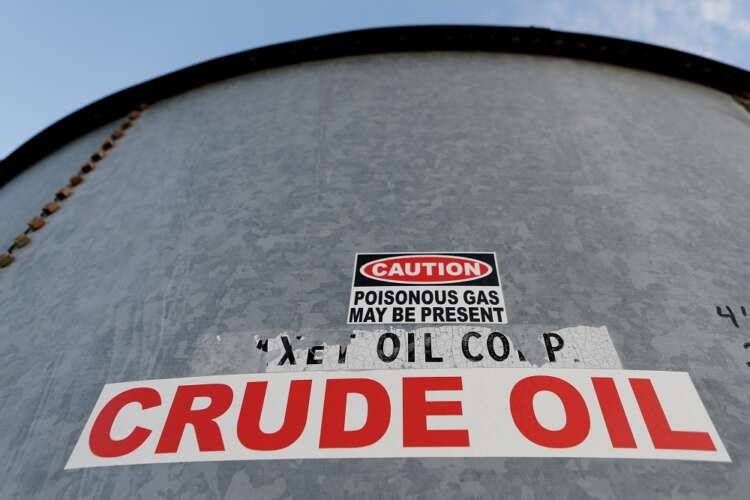
    This image illustrates the recent decline in oil prices, influenced by weak economic data from Asia and new lockdowns due to COVID-19. The article discusses how these factors are affecting global oil demand and market stability.
    Oil prices decline amid weak Asian economic data and lockdowns - Global Banking & Finance Review
    Why waste money on news and opinion when you can access them for free?

    Take advantage of our newsletter subscription and stay informed on the go!

    Subscribe

    By Devika Krishna Kumar

    NEW YORK (Reuters) -Oil prices weakened for a fourth session on Tuesday, on the back of surging cases of coronavirus in Japan and a weak demand picture in Asia, and as OPEC and its allies believe the market does not need more crude.

    Brent crude was down 3 cents at $69.48 per barrel as of 12:05 p.m. ET (1605 GMT.) U.S. West Intermediate crude (WTI) fell 18 cents, or 0.3%, to $67.11 a barrel. Both contracts had fallen for three straight sessions.

    Japan, the world third largest economy, on Tuesday extended its state of emergency in Tokyo and other regions and announced new measures covering seven more prefectures to counter a spike in COVID-19 infections that is threatening the medical system.

    Meanwhile New Zealand entered a new lockdown after the country’s first coronavirus case in six months was reported.

    Hedge funds and money managers cut net long positions in U.S. crude to the lowest since November in the week to Aug. 10 as resurgent coronavirus infections in several countries dampened hopes of a rapid resumption in long-distance air travel.

    “Although some progress in slowing or reversing COVID-19 trends is being seen, the oil market will likely require a distinct down trend in the virus that will allow China to re-open its economy in allowing the energy complex to establish a near-term base of support capable of reversing the long liquidation out of the WTI space,” said Jim Ritterbusch, president of Ritterbusch and Associates in Galena, Illinois.

    Daily crude processing in China, the world’s biggest oil importer, fell to its lowest in July since May 2020 as independent plants slashed production amid tighter quotas, high inventories and weakening profits, data showed on Monday.

    China’s factory output and retail sales growth also slowed sharply and missed expectations in July, as new COVID-19 outbreaks and floods disrupted businesses.

    On the supply side, U.S. shale oil output is expected to rise to 8.1 million barrels per day (bpd) in September, the highest since April 2020, according government data on Monday.

    Last week, U.S. President Joe Biden’s administration urged OPEC+, which groups members of the Organization of the Petroleum Exporting Countries and other producers such as Russia, to boost oil output to tackle rising gasoline prices.

    But four sources told Reuters on Monday that the group believes oil markets do not need more crude than they plan to release in the coming months.

    (Additional reporting by Shadia Nasralla and Yuka Obayashi; Editing by Marguerita Choy and David Evans)


    By Devika Krishna Kumar

    NEW YORK (Reuters) -Oil prices weakened for a fourth session on Tuesday, on the back of surging cases of coronavirus in Japan and a weak demand picture in Asia, and as OPEC and its allies believe the market does not need more crude.

    Brent crude was down 3 cents at $69.48 per barrel as of 12:05 p.m. ET (1605 GMT.) U.S. West Intermediate crude (WTI) fell 18 cents, or 0.3%, to $67.11 a barrel. Both contracts had fallen for three straight sessions.

    Japan, the world third largest economy, on Tuesday extended its state of emergency in Tokyo and other regions and announced new measures covering seven more prefectures to counter a spike in COVID-19 infections that is threatening the medical system.

    Meanwhile New Zealand entered a new lockdown after the country’s first coronavirus case in six months was reported.

    Hedge funds and money managers cut net long positions in U.S. crude to the lowest since November in the week to Aug. 10 as resurgent coronavirus infections in several countries dampened hopes of a rapid resumption in long-distance air travel.

    “Although some progress in slowing or reversing COVID-19 trends is being seen, the oil market will likely require a distinct down trend in the virus that will allow China to re-open its economy in allowing the energy complex to establish a near-term base of support capable of reversing the long liquidation out of the WTI space,” said Jim Ritterbusch, president of Ritterbusch and Associates in Galena, Illinois.

    Daily crude processing in China, the world’s biggest oil importer, fell to its lowest in July since May 2020 as independent plants slashed production amid tighter quotas, high inventories and weakening profits, data showed on Monday.

    China’s factory output and retail sales growth also slowed sharply and missed expectations in July, as new COVID-19 outbreaks and floods disrupted businesses.

    On the supply side, U.S. shale oil output is expected to rise to 8.1 million barrels per day (bpd) in September, the highest since April 2020, according government data on Monday.

    Last week, U.S. President Joe Biden’s administration urged OPEC+, which groups members of the Organization of the Petroleum Exporting Countries and other producers such as Russia, to boost oil output to tackle rising gasoline prices.

    But four sources told Reuters on Monday that the group believes oil markets do not need more crude than they plan to release in the coming months.

    (Additional reporting by Shadia Nasralla and Yuka Obayashi; Editing by Marguerita Choy and David Evans)


    More from Investing

    Explore more articles in the Investing category

    Image for Understanding the Factors Shaping Bitcoin’s Current Market Conditions
    Understanding the Factors Shaping Bitcoin’s Current Market Conditions
    Image for Understanding Investment Management Consulting Services in the U.S. Market
    Understanding Investment Management Consulting Services in the U.S. Market
    Image for The Role of DST Sponsors and Service Providers in Delaware Statutory Trusts
    The Role of DST Sponsors and Service Providers in Delaware Statutory Trusts
    Image for Understanding Self-Directed IRA Structures and Platform Models
    Understanding Self-Directed IRA Structures and Platform Models
    Image for 1031 Exchanges and Delaware Statutory Trusts: What Investors Need to Know
    1031 Exchanges and Delaware Statutory Trusts: What Investors Need to Know
    Image for Excellence in Innovation – Strategic Investment & Economic Transformation Egypt 2025
    Excellence in Innovation – Strategic Investment & Economic Transformation Egypt 2025
    Image for What Is the Average Pension Pot in the UK? (By Age)
    What Is the Average Pension Pot in the UK? (By Age)
    Image for From Money Printing to Market Surge: The Macro Forces Driving Crypto in 2026
    From Money Printing to Market Surge: The Macro Forces Driving Crypto in 2026
    Image for  Millennials Aren’t Ignoring Retirement. They’re Rebuilding It.
    Millennials Aren’t Ignoring Retirement. They’re Rebuilding It.
    Image for BridgeWise Launches FixedWise, the First AI Solution Bringing Granular Bond Intelligence to the European Market
    BridgeWise Launches FixedWise, the First AI Solution Bringing Granular Bond Intelligence to the European Market
    Image for Why Financial Advisors Are Rethinking Gold Allocations
    Why Financial Advisors Are Rethinking Gold Allocations
    Image for From Opaque to Investable: Yaniv Bertele's Blueprint for Transparent Alternatives
    From Opaque to Investable: Yaniv Bertele's Blueprint for Transparent Alternatives
    View All Investing Posts
    Previous Investing PostThe Swinging 6 T’s
    Next Investing PostWhy You Should Be Investing in UK Fintech Companies – James Sanders (London Diamonds)