Search
00
GBAF Logo
trophy
Top StoriesInterviewsBusinessFinanceBankingTechnologyInvestingTradingVideosAwardsMagazinesHeadlinesTrends

Subscribe to our newsletter

Get the latest news and updates from our team.

Global Banking & Finance Review®

Global Banking & Finance Review® - Subscribe to our newsletter

Company

    GBAF Logo
    • About Us
    • Profile
    • Privacy & Cookie Policy
    • Terms of Use
    • Contact Us
    • Advertising
    • Submit Post
    • Latest News
    • Research Reports
    • Press Release
    • Awards▾
      • About the Awards
      • Awards TimeTable
      • Submit Nominations
      • Testimonials
      • Media Room
      • Award Winners
      • FAQ
    • Magazines▾
      • Global Banking & Finance Review Magazine Issue 79
      • Global Banking & Finance Review Magazine Issue 78
      • Global Banking & Finance Review Magazine Issue 77
      • Global Banking & Finance Review Magazine Issue 76
      • Global Banking & Finance Review Magazine Issue 75
      • Global Banking & Finance Review Magazine Issue 73
      • Global Banking & Finance Review Magazine Issue 71
      • Global Banking & Finance Review Magazine Issue 70
      • Global Banking & Finance Review Magazine Issue 69
      • Global Banking & Finance Review Magazine Issue 66
    Top StoriesInterviewsBusinessFinanceBankingTechnologyInvestingTradingVideosAwardsMagazinesHeadlinesTrends

    Global Banking & Finance Review® is a leading financial portal and online magazine offering News, Analysis, Opinion, Reviews, Interviews & Videos from the world of Banking, Finance, Business, Trading, Technology, Investing, Brokerage, Foreign Exchange, Tax & Legal, Islamic Finance, Asset & Wealth Management.
    Copyright © 2010-2026 GBAF Publications Ltd - All Rights Reserved. | Sitemap | Tags | Developed By eCorpIT

    Editorial & Advertiser disclosure

    Global Banking & Finance Review® is an online platform offering news, analysis, and opinion on the latest trends, developments, and innovations in the banking and finance industry worldwide. The platform covers a diverse range of topics, including banking, insurance, investment, wealth management, fintech, and regulatory issues. The website publishes news, press releases, opinion and advertorials on various financial organizations, products and services which are commissioned from various Companies, Organizations, PR agencies, Bloggers etc. These commissioned articles are commercial in nature. This is not to be considered as financial advice and should be considered only for information purposes. It does not reflect the views or opinion of our website and is not to be considered an endorsement or a recommendation. We cannot guarantee the accuracy or applicability of any information provided with respect to your individual or personal circumstances. Please seek Professional advice from a qualified professional before making any financial decisions. We link to various third-party websites, affiliate sales networks, and to our advertising partners websites. When you view or click on certain links available on our articles, our partners may compensate us for displaying the content to you or make a purchase or fill a form. This will not incur any additional charges to you. To make things simpler for you to identity or distinguish advertised or sponsored articles or links, you may consider all articles or links hosted on our site as a commercial article placement. We will not be responsible for any loss you may suffer as a result of any omission or inaccuracy on the website.

    Home > Business > GLOBALISATION 2.0: A NEW APPROACH TO GLOBAL COMMERCE
    Business

    GLOBALISATION 2.0: A NEW APPROACH TO GLOBAL COMMERCE

    Published by Jessica Weisman-Pitts

    Posted on September 7, 2022

    4 min read

    Last updated: February 4, 2026

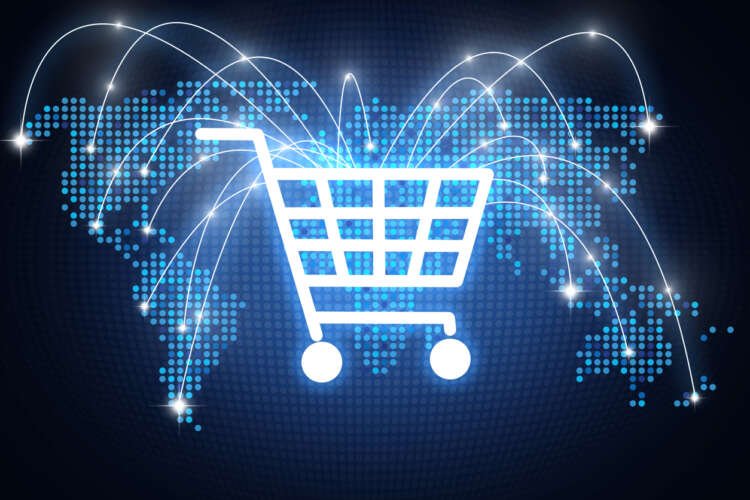
    An illustration of a shopping cart icon with lines connecting various locations worldwide, symbolizing the evolving landscape of global commerce amidst challenges in international trade. This image reflects themes of resilience and the new approach to globalisation discussed in the article.
    Shopping cart icon with global connections illustrating new global commerce - Global Banking & Finance Review
    Why waste money on news and opinion when you can access them for free?

    Take advantage of our newsletter subscription and stay informed on the go!

    Subscribe

    Tags:innovationsustainabilityGlobalizationfinancial crisiseconomic growth

    By Alex Macpherson, Senior Director at Manhattan Associates UK

    Over the past two years, the world seems to have entered a new era of great and constant instability, with profound repercussions for international trade and consumers. All this unrest has led many to ask the question: is this the end of globalisation and capitalism as we know it?

    Last March, the chief of the world’s largest fund management company – BlackRock – announced in a letter to his shareholders that it was “the end of the globalisation we have known for the past three decades”. The catalyst for this letter was the conflict in Ukraine, which suddenly disrupted the world order that had prevailed since the 1990s and, with it, many of the trade links that had existed between nations.

    Larry Fink’s announcement came almost two years to the day, after the start of another major global crisis that had put many of the established rules and institutions of the world to the test, and had also profoundly challenged the long-held acceptance of globalised, capitalist models – COVID-19.

    The common factor? The sudden awareness of the risk inherent in dependence on single markets or monopoly providers of goods: be it energy dependence, food dependence, health dependence or economic dependence. The world is experiencing the flaws of a system which, although virtuous in many respects, is nevertheless based on what has become an increasingly fragile balance over the last decade.

    REORGANISATION, RESILIENCE AND SECURITY

    Resilience and security have become bywords for an environment of increasing complexity and instability. While some people have advocated the need to onshore manufacturing processes and supply chain networks, this does not necessarily mean protectionism and unilateralism are the right answers. Rather, a new balance needs to be established, and that is what is happening today.

    In just two years, a millisecond in the recent history of international trade, many companies have reorganised to secure production lines, supply networks and (somehow) maintain costs at a level that, despite heightened global inflation, have remained relatively manageable. This is a real organisational and logistical tour de force, the enormity of which is not always fully appreciated by consumers.

    More than the capacity to adapt, perhaps the speed with which this adaptation is required is such a remarkable feat. How many years, or even decades, would it have taken companies at the end of the last century to reorganise their operating streams in a similar global crisis? Would it have even been possible without the connected systems, digitised processes and rapid innovation cycles we now have at our disposal today? The answer is almost certainly, no.

    SILVER LININGS IN ANY CLOUD

    It would be a mistake to think that the current symptoms (product and staffing shortages, inflationary pressure, etc.) are simply cyclical accidents. The globalisation of commerce, along with the supply chains that underpin it, not to mention the increase in political, technological and cyber risk, are all areas that create complexity, fragility and uncertainty and have been increasing for many years.

    In the face of such risks, it is vital that organisations and governments, societies and individuals have the tools at their disposal to be able to adapt quickly by building and having access to networks that are resilient, innovative and adaptable.

    Globalisation as we know it has been shaken to its foundations over the past two years, and repeated (if not) differing crises are causing the model to break. While the short-term stresses caused by this schism are being felt by billions around the globe, it is a process that we must look to seize upon if we are to build a new more resilient, sustainable and adaptable approach to global commerce in the long-term.

    To be clear, this is not the end of globalisation or capitalism; it may well, however, represent the beginning of a new phase in its evolution, one that will see unified supply chains play an increasingly important role in the flow of global commerce.

    Frequently Asked Questions about GLOBALISATION 2.0: A NEW APPROACH TO GLOBAL COMMERCE

    1What is globalization?

    Globalization refers to the process of increased interconnectedness and interdependence among countries, primarily in terms of trade, investment, and cultural exchange.

    2What is resilience in supply chains?

    Resilience in supply chains refers to the ability of a supply chain to anticipate, prepare for, respond to, and recover from disruptions, ensuring continuity of operations.

    3What is economic growth?

    Economic growth is the increase in the production of goods and services in an economy over a period, typically measured by the rise in Gross Domestic Product (GDP).

    4What is a financial crisis?

    A financial crisis is a situation where the value of financial institutions or assets drops significantly, leading to a loss of confidence and potential economic downturn.

    5What is sustainability in business?

    Sustainability in business refers to operating in a manner that meets present needs without compromising the ability of future generations to meet their own needs, often focusing on environmental and social impacts.

    More from Business

    Explore more articles in the Business category
    Image for Empire Lending helps SMEs secure capital faster, without bank delays
    Empire Lending helps SMEs secure capital faster, without bank delays
    Image for Why Leen Kawas is Prioritizing Strategic Leadership at Propel Bio Partners
    Why Leen Kawas is Prioritizing Strategic Leadership at Propel Bio Partners
    Image for How Commercial Lending Software Platforms Are Structured and Utilized
    How Commercial Lending Software Platforms Are Structured and Utilized
    Image for Oil Traders vs. Tech Startups: Surprising Lessons from Two High-Stakes Worlds | Said Addi
    Oil Traders vs. Tech Startups: Surprising Lessons from Two High-Stakes Worlds | Said Addi
    Image for Why More Mortgage Brokers Are Choosing to Join a Network
    Why More Mortgage Brokers Are Choosing to Join a Network
    Image for From Recession Survivor to Industry Pioneer: Ed Lewis's Data Revolution
    From Recession Survivor to Industry Pioneer: Ed Lewis's Data Revolution
    Image for From Optometry to Soul Vision: The Doctor Helping Entrepreneurs Lead With Purpose
    From Optometry to Soul Vision: The Doctor Helping Entrepreneurs Lead With Purpose
    Image for Global Rankings Revealed: Top PMO Certifications Worldwide
    Global Rankings Revealed: Top PMO Certifications Worldwide
    Image for World Premiere of Midnight in the War Room to be Hosted at Black Hat Vegas
    World Premiere of Midnight in the War Room to be Hosted at Black Hat Vegas
    Image for Role of Personal Accident Cover in 2-Wheeler Insurance for Owners and Riders
    Role of Personal Accident Cover in 2-Wheeler Insurance for Owners and Riders
    Image for The Young Rich Lister Who Also Teaches: How Aaron Sansoni Built a Brand Around Execution
    The Young Rich Lister Who Also Teaches: How Aaron Sansoni Built a Brand Around Execution
    Image for Q3 2025 Priority Leadership: Tom Priore and Tim O'Leary Balance Near-Term Challenges with Long-Term Strategic Wins
    Q3 2025 Priority Leadership: Tom Priore and Tim O'Leary Balance Near-Term Challenges with Long-Term Strategic Wins
    View All Business Posts
    Previous Business PostHow UK small businesses can benefit from invoice trading in the current economic climate
    Next Business PostAI Content Marketing: The Ethics and Risks for Ecommerce Brands