
Top Stories
DS Smith flags persisting weak demand after H1 profit fall
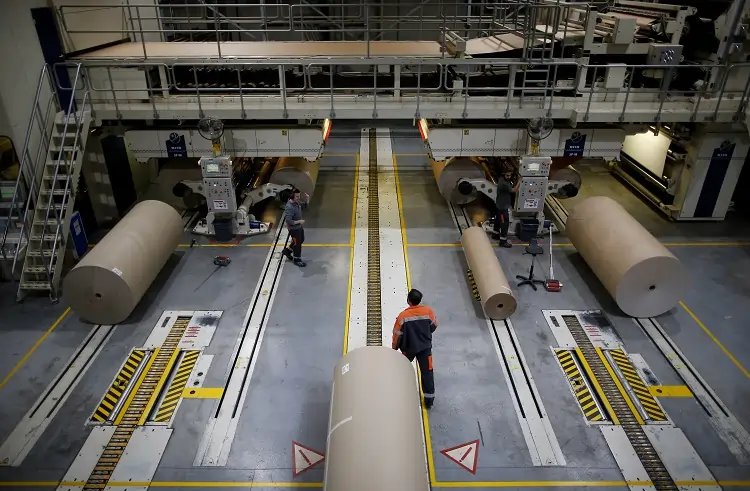
(Reuters) -Britain’s DS Smith said on Thursday packaging demand and paper pricing were “not as strong as expected” in its second quarter and these trends had continued, as it reported a 39% slump in half-year profit, in line with analyst expectations.
However the company, which has agreed to a $7.20 billion all-share takeover by U.S. rival International Paper, forecast continued modest growth in packaging volumes and said it would raise prices to offset higher input costs.
Paper and packaging firms are consolidating as the sector slowly recovers from a drop in demand as customers reduced stocks following a boom in packaging sales during the pandemic.
London-listed DS Smith, which provides packaging, paper and recycling services to companies including Amazon and Unilever, noted weak packaging prices and higher input costs, notably for fibre and paper, during the first half of its financial year to the end of October.
The company posted adjusted operating profit from continuing operations of 221 million pounds ($281 million).
For the full year, analysts have been expecting an operating profit of 574 million pounds, which would be an 18% fall from a year earlier.
DS Smith reiterated the IP deal was expected to close in the first quarter of 2025, making Thursday’s update potentially the last standalone results for the FTSE 100 firm.
Founded in the 1940s as a box-making business in east London, DS Smith operates in more than 30 countries, serving consumer goods, e-commerce and industrial sectors.
($1 = 0.7859 pounds)
(Reporting by Aby Jose Koilparambil in Bengaluru Editing by Rashmi Aich and Mark Potter)
Packaging demand refers to the need for packaging materials and solutions in various industries, influenced by consumer behavior, market trends, and economic conditions.
A merger is a business strategy where two companies combine to form a single entity, often to enhance market share, reduce competition, or achieve operational efficiencies.
Input costs are the expenses incurred by a company to produce goods or services, including raw materials, labor, and overhead costs.
Operating profit is the income generated from a company's core business operations, excluding any income derived from non-operational activities like investments.
Explore more articles in the Top Stories category