Search
00
GBAF Logo
trophy
Top StoriesInterviewsBusinessFinanceBankingTechnologyInvestingTradingVideosAwardsMagazinesHeadlinesTrends

Subscribe to our newsletter

Get the latest news and updates from our team.

Global Banking and Finance Review

Global Banking & Finance Review

Company

    GBAF Logo
    • About Us
    • Profile
    • Privacy & Cookie Policy
    • Terms of Use
    • Contact Us
    • Advertising
    • Submit Post
    • Latest News
    • Research Reports
    • Press Release
    • Awards▾
      • About the Awards
      • Awards TimeTable
      • Submit Nominations
      • Testimonials
      • Media Room
      • Award Winners
      • FAQ
    • Magazines▾
      • Global Banking & Finance Review Magazine Issue 79
      • Global Banking & Finance Review Magazine Issue 78
      • Global Banking & Finance Review Magazine Issue 77
      • Global Banking & Finance Review Magazine Issue 76
      • Global Banking & Finance Review Magazine Issue 75
      • Global Banking & Finance Review Magazine Issue 73
      • Global Banking & Finance Review Magazine Issue 71
      • Global Banking & Finance Review Magazine Issue 70
      • Global Banking & Finance Review Magazine Issue 69
      • Global Banking & Finance Review Magazine Issue 66
    Top StoriesInterviewsBusinessFinanceBankingTechnologyInvestingTradingVideosAwardsMagazinesHeadlinesTrends

    Global Banking & Finance Review® is a leading financial portal and online magazine offering News, Analysis, Opinion, Reviews, Interviews & Videos from the world of Banking, Finance, Business, Trading, Technology, Investing, Brokerage, Foreign Exchange, Tax & Legal, Islamic Finance, Asset & Wealth Management.
    Copyright © 2010-2025 GBAF Publications Ltd - All Rights Reserved.

    ;
    Editorial & Advertiser disclosure

    Global Banking and Finance Review is an online platform offering news, analysis, and opinion on the latest trends, developments, and innovations in the banking and finance industry worldwide. The platform covers a diverse range of topics, including banking, insurance, investment, wealth management, fintech, and regulatory issues. The website publishes news, press releases, opinion and advertorials on various financial organizations, products and services which are commissioned from various Companies, Organizations, PR agencies, Bloggers etc. These commissioned articles are commercial in nature. This is not to be considered as financial advice and should be considered only for information purposes. It does not reflect the views or opinion of our website and is not to be considered an endorsement or a recommendation. We cannot guarantee the accuracy or applicability of any information provided with respect to your individual or personal circumstances. Please seek Professional advice from a qualified professional before making any financial decisions. We link to various third-party websites, affiliate sales networks, and to our advertising partners websites. When you view or click on certain links available on our articles, our partners may compensate us for displaying the content to you or make a purchase or fill a form. This will not incur any additional charges to you. To make things simpler for you to identity or distinguish advertised or sponsored articles or links, you may consider all articles or links hosted on our site as a commercial article placement. We will not be responsible for any loss you may suffer as a result of any omission or inaccuracy on the website.

    Home > Technology > Biometrics and new standards – the key to digital security
    Technology

    Biometrics and new standards – the key to digital security

    Biometrics and new standards – the key to digital security

    Published by Gbaf News

    Posted on March 9, 2020

    Featured image for article about Technology

    By Nic Sarginson, Sr. Solutions Engineer for UKI and RSA at Yubico. 

    For the majority of consumers and businesses, passwords remain a necessary evil for accessing accounts and data. However, passwords have a problem: while technology has continued to develop, change and adapt, the humble username and password combination has stayed the same, and has been proven to be woefully inadequate when it comes to both security and usability.

    Thankfully, it’s likely that the days of using passwords are numbered. After all, they are inherently weak, sharable and easy to guess (for example ‘123456’ is the most common password according to a review by the UK’s National Cyber Security Centre). Passwords can also be simply plucked from databases of stolen information following data breaches.

    Companies can partially mitigate these weaknesses by enforcing more complex passwords consisting of a minimum length with numbers and special characters, but password security is largely reliant on the user and human error can quickly undermine security. An employee can have a technically strong password but then go on holiday and pass this on to a colleague to enable access to their work while they’re away. This is a surprisingly common occurrence – in our latest research, 51 per cent of individual users and even 44 percent of IT professionals admitted to sharing passwords with their colleagues in the workplace.

    Even if an employer puts barriers in to protect against these issues, if they suffer a data breach and their employees’ passwords are shared online, they are still vulnerable. After a large-scale breach it can be expected that a company would reset passwords and overhaul their security. However, when it comes to smaller attacks, this might not happen. Only 56 per cent of respondents surveyed by the Ponemon Institute for our 2020 State of Password and Authentication Security Behaviours Report who had experienced a phishing attack, credential theft or man-in-the-middle attack (MitM) said their organisation had changed how passwords or protected corporate accounts were managed since.

    Nic Sarginson

    Nic Sarginson


    Two-factor authentication

    A common first step for improving digital security is the implementation of two-factor authentication (2FA) methods. While basic 2FA methods – such as memorable words or SMS One Time Passwords (OTPs) – do improve security beyond a simple username and password, they are susceptible to modern phishing and MitM attacks. In fact, phone-based attacks are becoming increasingly common, with ‘SIM-swap’ fraud now a major factor in facilitating organised attacks on targets’ devices. If OTPs via SMS are to be used, it’s advisable for these to also be backed up by a separate, external authenticator.

    Phishing attacks can also be devastatingly effective as all cyber criminals need to rely on for success is simple human error. Spoofed emails are on the rise, with even the savviest of employees capable of being deceived into clicking on malicious links or opening malware-laden attachments. After all, phishing emails purporting to be from a legitimate source can be highly convincing. These attacks are regarded as a major threat by IT security professionals as it only requires one employee to fall victim to them for a perpetrator to harvest legitimate credentials and move laterally across the network.

    Additionally, busy mobile employees often make use of public Wi-Fi where available, which can leave them vulnerable to MitM attacks, given that hackers have been known to spoof connections to fake public Wi-Fi networks. In these scenarios, unsuspecting users log on and, in doing so, unknowingly provide a hacker with access to their credentials – unless their connections are encrypted. Attackers are also then able to easily bypass the more basic 2FA authentication methods with ease.

    SMS OTPs are also in addition to, rather than instead of, passwords and re-typing codes from one device to another is cumbersome and prone to error. This has proved to be a barrier in the uptake of these methods. As an additional layer of security, 2FA is a basic necessity for all organisations, but it’s important to remember that not all 2FA methods are created equal. The methods discussed above are vulnerable to abuse by cyber adversaries who are increasingly adept at spoofing connections.

    As the 2020s get underway, it’s high time we finally move away from the inconvenient and insecure username and password combination and address well-known vulnerabilities with basic 2FA, looking instead to more sophisticated forms for authentication, including biometric technologies.

    The security solution

    Organisations can boost security and the user experience by reducing reliance on passwords and embracing new standards supported by s biometric technology. Indeed, FIDO2 specifications address all of the issues associated with traditional authentication, enabling users to leverage common devices to easily authenticate to online services in both mobile and desktop environments.

    For example, WebAuthn, the first global accepted standard for web authentication, was launched in 2019. WebAuthn is a core component of FIDO2, enabling online services to use FIDO Authentication through a standard web API that can be built into browsers and related web platform infrastructure. Co-developed by our experts and approved by the W3C, WebAuthn offers websites, services, and applications, stronger, more user-friendly multi-factor authentication. The standard is based on public key cryptography that eliminates the need for creating and storing passwords in a central location where they are vulnerable to data breaches. What’s more, it offers users a wide range of ways to authenticate including the choice of using an external authenticator such as a hardware security key or a built-in biometric sensor, by embracing broad support for a choice of authentication devices.

    In summary, WebAuthn gives organisations multiple options to choose from, which introduces a degree of personalisation and encourages a move away from username/passwords towards more secure, user-friendly security methods. When used in combination with biometric technology – which offers a far more robust method of authentication than basic 2FA, while delivering a seamless experience for users – FIDO2/WebAuthn delivers a far superior level of protection against threats such as MitM and phishing attacks. In fact, Google has stated that it has had no reported or confirmed account takeovers since implementing FIDO certified physical security tokens in early 2017.

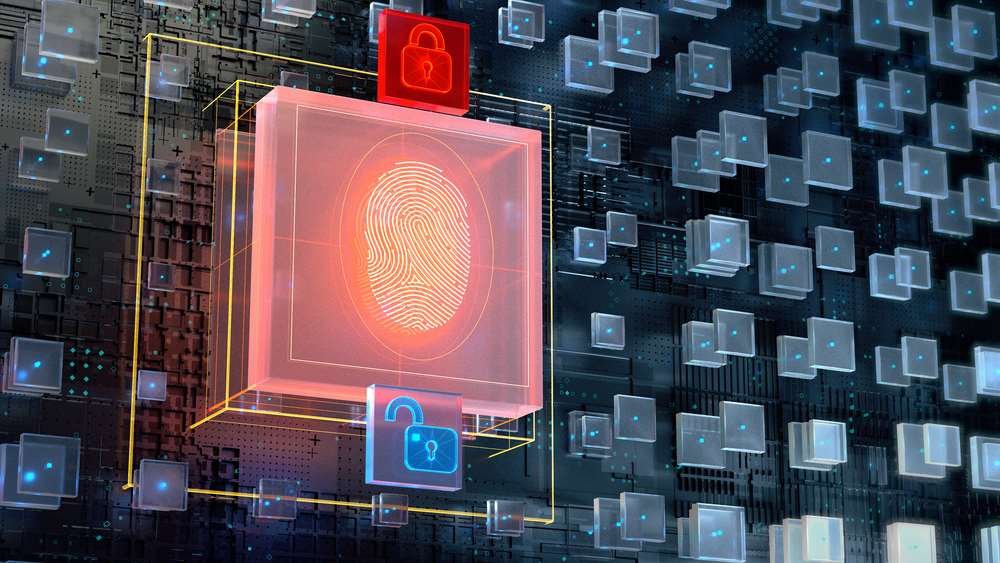
    The strength of biometric technology is that it relies on unique human biology, a fingerprint or a face, that cannot be easily copied or hacked. Fingerprint technology has become ubiquitous: it is how many people login to their phones, login to apps and authorise mobile payments. Extending this functionality to secure a wider range of devices is a logical continuation of this technology.

    Biometric technologies and the options offered by FIDO2 and WebAuthn are the beginning of the end for passwords, which we hope will soon be a thing of the past. By embracing new technologies, including biometric authentication, organisations will benefit from far superior security, while freeing users from the arduous password problem.

    Related Posts
    Financial services: a human-centric approach to managing risk
    Financial services: a human-centric approach to managing risk
    LakeFusion Secures Seed Funding to Advance AI-Native Master Data Management
    LakeFusion Secures Seed Funding to Advance AI-Native Master Data Management
    Clarity, Context, Confidence: Explainable AI and the New Era of Investor Trust
    Clarity, Context, Confidence: Explainable AI and the New Era of Investor Trust
    Data Intelligence Transforms the Future of Credit Risk Strategy
    Data Intelligence Transforms the Future of Credit Risk Strategy
    Architect of Integration Ushers in a New Era for AI in Regulated Industries
    Architect of Integration Ushers in a New Era for AI in Regulated Industries
    How One Technologist is Building Self-Healing AI Systems that Could Transform Financial Regulation
    How One Technologist is Building Self-Healing AI Systems that Could Transform Financial Regulation
    SBS is Doubling Down on SaaS to Power the Next Wave of Bank Modernization
    SBS is Doubling Down on SaaS to Power the Next Wave of Bank Modernization
    Trust Embedding: Integrating Governance into Next-Generation Data Platforms
    Trust Embedding: Integrating Governance into Next-Generation Data Platforms
    The Guardian of Connectivity: How Rohith Kumar Punithavel Is Redefining Trust in Private Networks
    The Guardian of Connectivity: How Rohith Kumar Punithavel Is Redefining Trust in Private Networks
    BNY Partners With HID and SwiftConnect to Provide Mobile Access to its Offices Around the Globe With Employee Badge in Apple Wallet
    BNY Partners With HID and SwiftConnect to Provide Mobile Access to its Offices Around the Globe With Employee Badge in Apple Wallet
    How Integral’s CTO Chidambaram Bhat is helping to solve  transfer pricing problems through cutting edge AI.
    How Integral’s CTO Chidambaram Bhat is helping to solve transfer pricing problems through cutting edge AI.
    Why Physical Infrastructure Still Matters in a Digital Economy
    Why Physical Infrastructure Still Matters in a Digital Economy

    Why waste money on news and opinions when you can access them for free?

    Take advantage of our newsletter subscription and stay informed on the go!

    Subscribe

    Previous Technology PostHow to succeed in email marketing?
    Next Technology PostThe D Suite: Digital, Data and Disruption in 2020 and beyond

    More from Technology

    Explore more articles in the Technology category

    Why Compliance Has Become an Engineering Problem

    Why Compliance Has Become an Engineering Problem

    Can AI-Powered Security Prevent $4.2 Billion in Banking Fraud?

    Can AI-Powered Security Prevent $4.2 Billion in Banking Fraud?

    Reimagining Human-Technology Interaction: Sagar Kesarpu’s Mission to Humanize Automation

    Reimagining Human-Technology Interaction: Sagar Kesarpu’s Mission to Humanize Automation

    LeapXpert: How financial institutions can turn shadow messaging from a risk into an opportunity

    LeapXpert: How financial institutions can turn shadow messaging from a risk into an opportunity

    Intelligence in Motion: Building Predictive Systems for Global Operations

    Intelligence in Motion: Building Predictive Systems for Global Operations

    Predictive Analytics and Strategic Operations: Strengthening Supply Chain Resilience

    Predictive Analytics and Strategic Operations: Strengthening Supply Chain Resilience

    How Nclude.ai   turned broken portals into completed applications

    How Nclude.ai turned broken portals into completed applications

    The Silent Shift: Rethinking Services for a Digital World?

    The Silent Shift: Rethinking Services for a Digital World?

    Culture as Capital: How Woxa Corporation Is Redefining Fintech Sustainability

    Culture as Capital: How Woxa Corporation Is Redefining Fintech Sustainability

    Securing the Future: We're Fixing Cyber Resilience by Finally Making Compliance Cool

    Securing the Future: We're Fixing Cyber Resilience by Finally Making Compliance Cool

    Supply chain security risks now innumerable and unmanageable for majority of cybersecurity leaders, IO research reveals

    Supply chain security risks now innumerable and unmanageable for majority of cybersecurity leaders, IO research reveals

    Why AI's Promise of Efficiency May Break Tomorrow's Workforce

    Why AI's Promise of Efficiency May Break Tomorrow's Workforce

    View All Technology Posts