Top Stories
Banning Russian aluminium would create uncertainty about LME’s role -Rusal
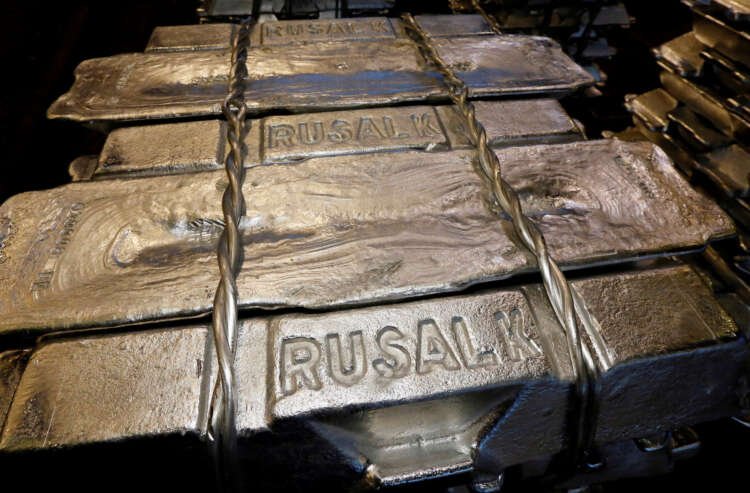
LONDON (Reuters) – Banning Rusal’s metal will fuel volatility in the London Metal Exchange’s aluminium contracts and create uncertainty about the exchange’s role in the metals industry, the Russian aluminium giant said in a letter seen by Reuters.
LONDON (Reuters) – Banning Rusal’s metal will fuel volatility in the London Metal Exchange’s aluminium contracts and create uncertainty about the exchange’s role in the metals industry, the Russian aluminium giant said in a letter seen by Reuters.
Last week, the world’s largest and oldest market for trading metals, said it was considering a consultation on whether Russian metal should continue to be traded and stored in its system.
The letter addressed to “partners” said that if there is a consultation, Rusal will highlight potential impacts such as disruption of the aluminium supply chain due to “potential change of regional delivery dynamics”.
Rusal, the world’s largest aluminium producer outside China, is expected to account for 6% of global supplies of the metal this year.
Excluding Rusal’s metal could mean “increasing market volatility due to restrictions on the pool of physical liquidity on the LME,” the letter emailed to “partners” on Oct. 5 said.
“(A ban would) create uncertainty around the role of the LME in the market due to departing from applicable laws, thus making the exchange less attractive to all participants.”
This, Rusal said, would create liquidity issues and risk management problems for all segments of the aluminium industry.
Aluminium industry sources said there was some concern that Rusal would not be able to sell its metal and would deliver it to registered warehouses of the 145-year-old metal exchange.
“We can confirm categorically there are no plans to do so, as our focus remains on executing our current business, business secured for 2023 and business in finalisation,” the letter said.
“In addition, Rusal also notes the alarmist views expressed by other interested parties that also contain unfounded statements that we regard as being harmful to maintaining an orderly market.”
Rusal said in a separate statement on its website that its sales book is solid, and the company has no need to deliver metal to LME warehouses.
(Reporting by Pratima Desai and Polina Devitt; editing by David Evans and Bernadette Baum)
Liquidity is the ease with which an asset can be converted into cash without affecting its market price. High liquidity means assets can be quickly sold or bought in the market, while low liquidity can lead to price drops when selling.
Risk management involves identifying, assessing, and prioritizing risks followed by coordinated efforts to minimize, monitor, and control the probability or impact of unfortunate events. It is crucial in finance to protect investments and ensure stability.
The aluminium sector encompasses the production, processing, and trading of aluminium products. It plays a significant role in various industries, including construction, automotive, and packaging, due to aluminium's lightweight and durable properties.
Financial stability refers to a condition where the financial system operates effectively, allowing for the smooth functioning of markets and the economy. It is characterized by stable prices, low inflation, and a resilient banking sector.
Explore more articles in the Top Stories category