Banking
Banking on the Circular Economy: How Financial Institutions Are Shaping a More Sustainable Future
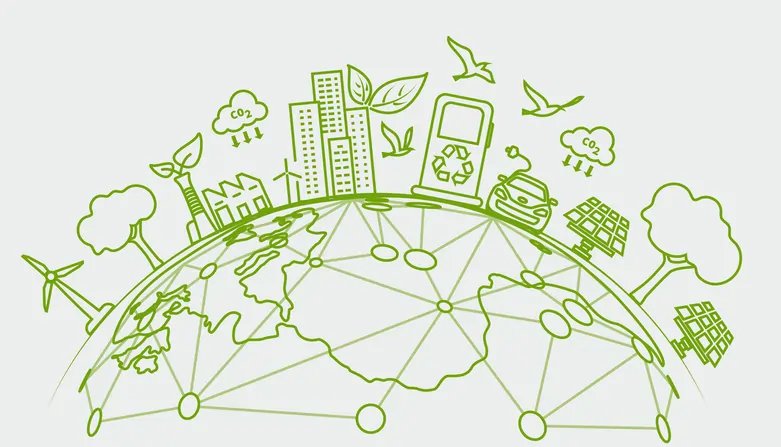
The circular economy is reshaping the traditional economic development model by prioritizing sustainability, resource efficiency, and long-term resilience. As governments and industries adopt circular strategies to reduce waste and decouple growth from resource consumption, banks are emerging as cri...
The circular economy is reshaping the traditional economic development model by prioritizing sustainability, resource efficiency, and long-term resilience. As governments and industries adopt circular strategies to reduce waste and decouple growth from resource consumption, banks are emerging as critical enablers of this transition. While the core principles of circularity—reuse, regeneration, and closed-loop systems—remain globally relevant, the role of banks in financing and supporting these efforts varies significantly across regions, shaped by differing policy frameworks, market dynamics, and institutional capacities.
European Union: Pioneering Circular Economy Finance
The European Union continues to lead global efforts in circular economy finance, driven by a strong regulatory framework and coordinated investment strategies. A key milestone is the Joint Initiative on Circular Economy (JICE)—a collaboration between the European Investment Bank (EIB) and five national promotional banks and institutions—which has committed to mobilizing €16 billion by 2025 to support circular economy projects across the EU. The initiative recently expanded with Invest-NL joining as its newest partner, further strengthening the regional push toward sustainable production and consumption models.
European banks are also driving innovation through the creation of specialized financial products, alignment with the EU Taxonomy for Sustainable Activities, and enhanced reporting and disclosure requirements that promote transparency and accountability in circular finance.
Key initiatives across the region include:
Asia-Pacific: Aligning Growth with Circular Ambitions
The Asia-Pacific region is expanding its focus on circular economy practices, reflecting a growing recognition of the need to balance economic development with environmental sustainability. With a broad spectrum of economies at various stages of growth, the region presents both opportunities and challenges for financial institutions aiming to support circular business models. Banks are beginning to integrate environmental, social, and governance (ESG) considerations into lending criteria and are increasingly offering products tailored to circular initiatives.
The United Nations Economic and Social Commission for Asia and the Pacific (ESCAP) is playing a central role in shaping regional strategies. It highlights the importance of resource efficiency, waste reduction, and alignment with the Sustainable Development Goals (SDGs). These policy efforts encourage a broader shift in how capital is allocated, particularly in manufacturing, energy, and urban development.
Emerging Markets: Unlocking Circular Potential
In emerging markets, the transition to a circular economy is shaped by structural financial constraints, regulatory gaps, and the potential for large-scale environmental and economic gains. Many countries in Africa, Latin America, and parts of Asia are rich in natural resources and home to rapidly growing populations, making adopting circular models urgent and impactful. However, limited access to financing, underdeveloped policy frameworks, and a higher perception of risk continue to hinder widespread implementation.
To bridge these gaps, multilateral development banks and international finance institutions are stepping in with targeted support—from technical assistance to blended finance instruments—designed to reduce risk and improve capital flows toward circular initiatives. These efforts are increasingly focused on agriculture, construction, and urban waste management sectors, where circular approaches can deliver both social and environmental returns.
Persistent challenges include:
North America: Market-Led Innovation in Circular Finance
In North America, the development of circular economy finance has primarily followed a market-driven trajectory, led by private sector innovation rather than centralized regulation. Financial institutions in the United States and Canada increasingly offer sustainability-linked loans and green bonds, focusing on supporting circular business models in manufacturing, technology, and consumer goods.
Rather than uniform national strategies, circular economy initiatives tend to emerge through corporate sustainability commitments, public-private partnerships, and regional policy frameworks. Banks are also partnering with fintech platforms and data providers to assess the long-term value of circular operations and integrate circularity into their credit and risk evaluation models.
Key areas of focus include:
Despite regional variations, several shared strategies are emerging as financial institutions around the world adapt their operations to support the circular economy:
Development of Specialized Financial Instruments
Banks are designing financial products tailored to circular business models, including green loans, sustainability-linked credit lines, and circular supply chain financing. These instruments help direct capital toward companies embracing resource efficiency, waste reduction, and sustainable innovation.
Advancement in Risk Assessment and Management
To address the unique characteristics of circular investments, financial institutions are building sophisticated risk assessment models that go beyond traditional linear frameworks. These models incorporate environmental, social, and governance (ESG) criteria to better evaluate long-term resilience and sustainability performance.
Engagement in Collaborative Platforms
The United Nations Environment Programme Finance Initiative (UNEP FI) is convening regional roundtables on sustainable finance in 2025. These events provide a forum for banks, regulators, and stakeholders to share insights, develop best practices, and build the institutional capacity needed to scale up circular finance globally.
Technology continues to lead in advancing circular economy banking by improving transparency, efficiency, and decision-making. Financial institutions are leveraging digital tools to better assess risks, monitor supply chains, and expand access to sustainable investment opportunities.
These technologies are streamlining operations and helping banks align financial flows with long-term sustainability objectives.
The circular economy is not just a pathway to sustainability but also to long-term economic resilience. According to projections, circular business models could unlock substantial financial benefits across regions. In Europe alone, McKinsey & Company has estimated that adopting circular principles could generate more than €1.8 trillion in annual benefits by 2030, driven by productivity gains, reduced material costs, and innovation-led growth. These potential gains underscore the economic viability of circular finance and the opportunities it presents for financial institutions.
These potential gains are not limited to Europe. As global supply chains adapt and environmental regulations tighten, circular models are expected to drive new investment flows, create employment opportunities in sustainable sectors, and strengthen long-term competitiveness across industries.
While momentum around circular economy financing continues to build, significant barriers hinder broader adoption across the banking sector. A recent assessment by the World Benchmarking Alliance found that only 3% of financial institutions have published comprehensive transition plans outlining how they intend to support a circular or low-carbon economy. This lack of strategic clarity highlights a significant disconnect between sustainability ambitions and operational execution.
Additional challenges include inconsistent regulatory frameworks across jurisdictions, which can complicate international banks' risk assessments and product design. Meanwhile, a pressing need remains for continued innovation in financial instruments that can accommodate the unique characteristics of circular business models, including longer time horizons, non-linear value creation, and ecosystem-based approaches.
Addressing these challenges will require greater collaboration between financial institutions, regulators, and the private sector to create a more enabling environment for circular finance to scale.
The role of banks in enabling the circular economy is becoming more clearly defined—shaped by local policy environments, market structures, and the pace of sustainability integration within the financial sector. While strategies vary across regions, a shared understanding is that emerging circularity is not only a response to environmental pressures but also a pathway to long-term competitiveness and economic efficiency.
Financial institutions that adapt their products, risk frameworks, and client engagement strategies to support circular models will be better positioned to meet shifting market expectations. Progress will depend less on standardized solutions and more on the ability to design flexible approaches that reflect local realities.
Banks that embed circular economy principles into their core business strategies, not just compliance programs—will play a defining role in shaping how capital supports sustainable economic transformation.
Explore more articles in the Banking category