Interviews
Balancing Growth, Sustainability and Support of MSMEs
Published by Jessica Weisman-Pitts
Posted on December 20, 2024
6 min readLast updated: January 27, 2026
Published by Jessica Weisman-Pitts
Posted on December 20, 2024
6 min readLast updated: January 27, 2026
FPM SA is a Congolese financial institution licensed by the BCC (Central Bank of Congo), with KfW, BIO, Cordaid and Incofin as shareholders. As a key player in economic and social development in the DRC, FPM aims to help reduce poverty and improve living conditions in DR Congo by building and develo...
FPM SA is a Congolese financial institution licensed by the BCC (Central Bank of Congo), with KfW, BIO, Cordaid and Incofin as shareholders. As a key player in economic and social development in the DRC, FPM aims to help reduce poverty and improve living conditions in DR Congo by building and developing an inclusive and responsible financial system. Over the past decade, FPM’s achievements have included the disbursement of a credit volume reaching nearly 120 million USD and the granting of more than 480,000 loans to MSMEs via its financial institution partners. In addition, 2024 has seen FPM SA pick up the Global Banking & Finance award for Best Asset Management Company – RD Congo.
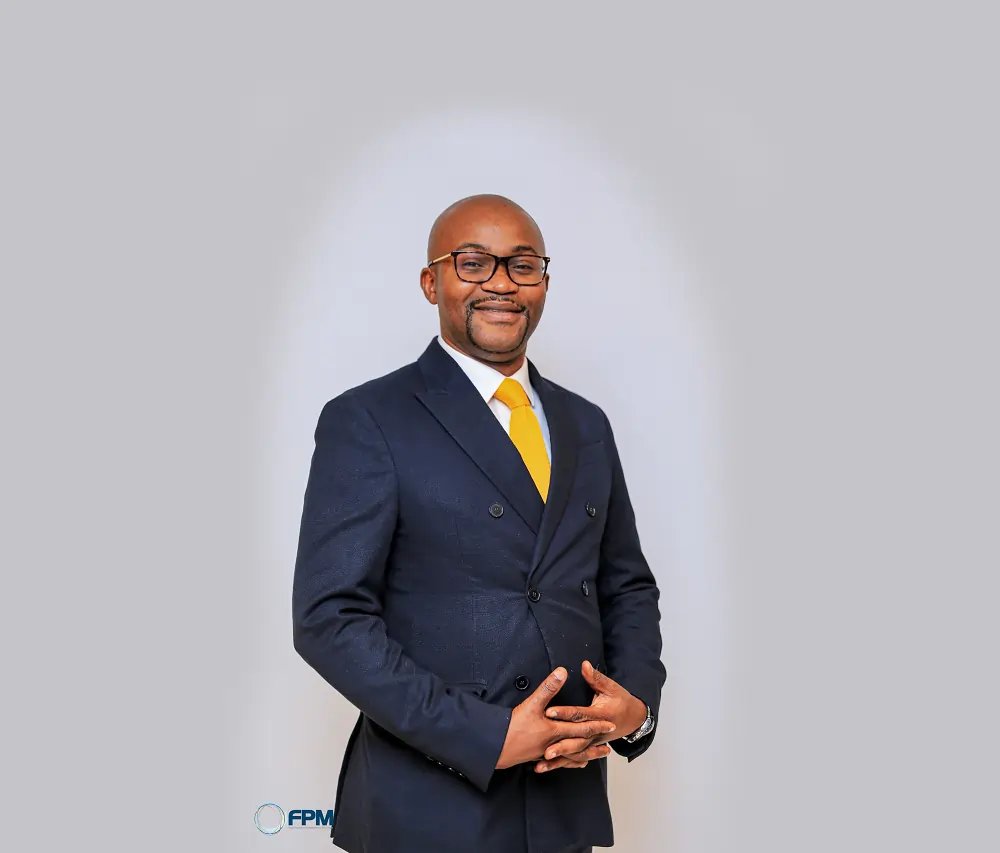
CEO Patrick Nkongo was recently interviewed by Global Banking & Finance Review editor Wanda Rich, when he elaborated on the role played by FPM SA in the DRC’s financial sector.
“Our primary mission is to promote financial inclusion by raising medium- and long-term funds to support MSME needs in the financial sector,” he explained. “We then lend these funds to local financial institutions like banks, MFIs (microfinance institutions) and COOPECs (credit cooperatives), who lend to MSMEs (micro, small and medium enterprises) and low-income individuals. We also provide partial loan portfolio guarantees, ensuring financial institutions can take more significant risks while maintaining financial stability. FPM SA is playing a central role in promoting access to finance in the DRC, particularly for MSMEs, which are often underserved by traditional banks.”
He revealed that, in striking a balance between supporting MSMEs and generating returns, FPM’s approach to asset management is built around support for sustainable development. “We allocate resources to institutions that demonstrate both social impact and solid financial performance, enabling us to generate returns while contributing to the growth of MSMEs and the financial ecosystem,” he said. “Our dual objective – impact and profitability – requires careful assessment of credit, counterparty and sector-specific risks while ensuring that our investment decisions are aligned with financial inclusion objectives. Our balanced approach ensures that, while we seek returns for our investors, we continue to stimulate the Congolese economy by supporting the businesses that need it most.”
Patrick went on to detail how fund allocation is prioritised across different financial institutions and sectors, noting the specific criteria used to determine where more attention or funding is required. “Fund allocation is guided by several criteria, including institutional resilience, social impact and alignment with our mission of financial inclusion,” he reported. “We prioritise financial institutions that have a strong commitment to serving underserved populations and that can demonstrate sustainable growth in areas with low access to finance. This is especially critical in regions like the eastern DRC, where the conflict has severely affected financial access. We also consider sector-specific priorities with an emphasis on agriculture, energy, gender, youth and digitalisation.”
Given that many of its partners operate in high-risk regions, such as the conflict-affected east, Patrick highlighted risk management as a central pillar of FPM’s operations. “We employ a multi-tiered approach that includes stringent credit risk assessments, monitoring of our financial institution partners, and regular stress testing of our portfolio to identify vulnerabilities,” he said. “We place great emphasis on understanding their strategies for resilience and adaptation. Moreover, our partial loan guarantees allow financial institutions to take calculated risks while minimising potential losses. The presence of a dedicated Risk and Compliance Director ensures that all decisions are made with a comprehensive understanding of regulatory requirements and market conditions.”
Wanda also asked him about the need to balance long-term growth with short-term liquidity needs, which he described as an essential consideration in a challenging market like the DRC. “We achieve this by carefully structuring our investment schedules, ensuring that we maintain sufficient liquidity to meet the short-term needs of our partners while pursuing long-term growth strategies for sustainable returns,” he said. “We use instruments such as short-term loans and guarantees that offer flexibility while maintaining a diversified portfolio to spread risk and manage liquidity. The key lies in the strategic alignment between liquidity needs and the maturity profiles of our assets, which are regularly reviewed to ensure they remain adaptable to market conditions.”
The guarantee funds that FPM SA manages are an integral part of its overall asset management strategy, Patrick revealed; by providing partial guarantees on loan portfolios, FPM enables financial institutions to extend credit to sectors that would otherwise be deemed too risky. “These guarantees enable us to catalyse lending to MSMEs and underserved segments, thereby promoting economic activity while keeping risk under control,” he explained. “Guarantee funds also help to improve the credit profile of our partner institutions, making them more attractive to other investors and ensuring their long-term viability. In this way, guarantees are a tool not only for mitigating risk but also for reinforcing the impact of our asset management efforts.”
The need to incorporate a strong ESG (environmental, social and governance) proposition into its decision-making has a significant influence on FPM SA’s asset management strategy. “Sustainability is at the heart of what we do,” Patrick confirmed. “We ensure that our investment and lending decisions take ESG factors into account. This means prioritising projects and financial institutions that have a positive social impact, contribute to environmental conservation or are governed by strong ethical standards. We also have strict policies against financing activities that could harm communities or degrade the environment.”
Finally, Patrick provided some insight into FPM SA’s ambitious plans to develop its asset management operations over the coming years. “We will focus on developing our partnerships with lenders to increase the volume of funds under management up to 300 million USD by 2028. We will invest in sectors or segments with high social impact such as gender, youth, agriculture, clean energy and digitalisation.
“We also plan to expand our geographical footprint in the DRC, particularly in areas that are still underserved,” he added. “In addition, we plan to diversify our product offering, possibly including more innovative financial instruments tailored to the specific needs of the Congolese market, like individual guarantee schemes, factoring and housing loans.
Financial inclusion refers to the accessibility of financial services to all individuals, particularly those underserved by traditional banks, enabling them to participate in the financial system.
MSMEs stand for micro, small, and medium enterprises, which are businesses characterized by their size and revenue, playing a crucial role in economic development and job creation.
Asset management is the systematic process of developing, operating, maintaining, and selling assets in a cost-effective manner, often involving investment strategies to maximize returns.
Risk management involves identifying, assessing, and prioritizing risks followed by coordinated efforts to minimize, monitor, and control the probability or impact of unfortunate events.
Loan portfolio guarantees are financial instruments that provide assurance to lenders by covering a portion of the losses incurred in case of borrower defaults, thus encouraging lending.
Explore more articles in the Interviews category