
Search
00
GBAF Logo
trophy
Top StoriesInterviewsBusinessFinanceBankingTechnologyInvestingTradingVideosAwardsMagazinesHeadlinesTrends

Subscribe to our newsletter

Get the latest news and updates from our team.

Global Banking & Finance Review®

Global Banking & Finance Review® - Subscribe to our newsletter

Company

    GBAF Logo
    • About Us
    • Profile
    • Privacy & Cookie Policy
    • Terms of Use
    • Contact Us
    • Advertising
    • Submit Post
    • Latest News
    • Research Reports
    • Press Release
    • Awards▾
      • About the Awards
      • Awards TimeTable
      • Submit Nominations
      • Testimonials
      • Media Room
      • Award Winners
      • FAQ
    • Magazines▾
      • Global Banking & Finance Review Magazine Issue 79
      • Global Banking & Finance Review Magazine Issue 78
      • Global Banking & Finance Review Magazine Issue 77
      • Global Banking & Finance Review Magazine Issue 76
      • Global Banking & Finance Review Magazine Issue 75
      • Global Banking & Finance Review Magazine Issue 73
      • Global Banking & Finance Review Magazine Issue 71
      • Global Banking & Finance Review Magazine Issue 70
      • Global Banking & Finance Review Magazine Issue 69
      • Global Banking & Finance Review Magazine Issue 66
    Top StoriesInterviewsBusinessFinanceBankingTechnologyInvestingTradingVideosAwardsMagazinesHeadlinesTrends

    Global Banking & Finance Review® is a leading financial portal and online magazine offering News, Analysis, Opinion, Reviews, Interviews & Videos from the world of Banking, Finance, Business, Trading, Technology, Investing, Brokerage, Foreign Exchange, Tax & Legal, Islamic Finance, Asset & Wealth Management.
    Copyright © 2010-2026 GBAF Publications Ltd - All Rights Reserved. | Sitemap | Tags | Developed By eCorpIT

    Editorial & Advertiser disclosure

    Global Banking & Finance Review® is an online platform offering news, analysis, and opinion on the latest trends, developments, and innovations in the banking and finance industry worldwide. The platform covers a diverse range of topics, including banking, insurance, investment, wealth management, fintech, and regulatory issues. The website publishes news, press releases, opinion and advertorials on various financial organizations, products and services which are commissioned from various Companies, Organizations, PR agencies, Bloggers etc. These commissioned articles are commercial in nature. This is not to be considered as financial advice and should be considered only for information purposes. It does not reflect the views or opinion of our website and is not to be considered an endorsement or a recommendation. We cannot guarantee the accuracy or applicability of any information provided with respect to your individual or personal circumstances. Please seek Professional advice from a qualified professional before making any financial decisions. We link to various third-party websites, affiliate sales networks, and to our advertising partners websites. When you view or click on certain links available on our articles, our partners may compensate us for displaying the content to you or make a purchase or fill a form. This will not incur any additional charges to you. To make things simpler for you to identity or distinguish advertised or sponsored articles or links, you may consider all articles or links hosted on our site as a commercial article placement. We will not be responsible for any loss you may suffer as a result of any omission or inaccuracy on the website.

    Home > Top Stories > Analysis-Big losses in Russia-linked stocks have investors rethinking other depositary receipts
    Top Stories

    Analysis-Big losses in Russia-linked stocks have investors rethinking other depositary receipts
    Published by Uma Rajagopal

    Posted on August 14, 2023

    5 min read

    Last updated: February 1, 2026

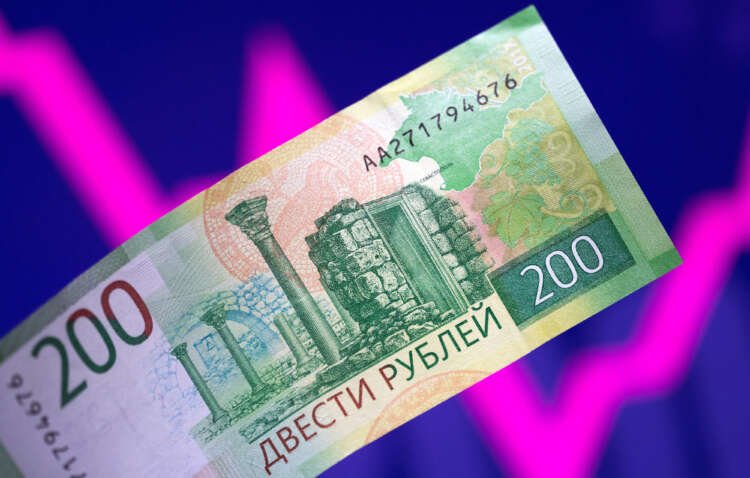
    This illustration depicts a Russian rouble banknote alongside stock market graphs, symbolizing the impact of geopolitical tensions on depositary receipts. It highlights investor concerns following Russia's de-listing of securities, reflecting the broader implications for global finance.
    Illustration of a Russian rouble banknote with stock market graphs - Global Banking & Finance Review
    Why waste money on news and opinion when you can access them for free?

    Take advantage of our newsletter subscription and stay informed on the go!

    Subscribe

    Tags:equityforeign investorsemerging marketsinvestment portfoliosfinancial stability

    Analysis-Big losses in Russia-linked stocks have investors rethinking other depositary receipts

    By Sinead Cruise and Carolina Mandl

    LONDON/NEW YORK (Reuters) – Global investors are losing confidence in securities linked to shares of companies in the world’s geopolitical hot spots, investors and analysts said, after Moscow moved to de-list Russian depositary receipts from foreign exchanges in retaliation for Western sanctions over the war in Ukraine.

    Moscow’s actions have deprived many foreign investors of the ability to trade in Russian securities, including depositary receipts. Investors are worried about future copycat actions by other governments who might look to reduce foreign influence over their leading companies.

    Depositary receipts, or DRs, are certificates issued by a bank representing shares in a foreign company traded on a local stock exchange.

    DRs reduce currency and liquidity risk for buyers, who see them as one of the surest ways to invest in companies in countries ranging from Brazil to China.

    But events in Russia have forced many investors to write down the value of depositary receipts of Russian companies to zero, given their inability to trade them. Investors and analysts now wonder if future geopolitical tensions could lead to similar reactions by other governments and if those risks are accurately reflected by current prices.

    “Political instability and rapidly shifting geopolitical alliances can, in a very short amount of time, result in frozen and inaccessible capital,” Peter C. Earle, economist with American Institute for Economic Research, told Reuters.

    “It’s long past time for investors to begin to consider the intersection between three variables: the size of their exposure to foreign securities, the likely return on those issues over time, and the potential for conflict,” Earle said.

    Data from Citigroup shows $2 trillion in DRs were traded in the first half of 2023. Companies raised $4.7 billion in the first half of this year, versus $2.8 billion in the same period of 2022, from selling DRs, according to Citi. Activity was muted last year following a downturn in the overall equity markets.

    Among the 10 most traded DR programs in 2022, five were issued by Chinese companies.

    “Portfolio globalization and diversification continues despite geopolitical concerns in select markets and sectors,” Citigroup told Reuters at the end of July. CONSEQUENCES

    Loss of confidence in DRs could drain needed foreign capital from firms in emerging economies, for instance. Some advisers said global banks that issue DRs should better spell out potential risks to investors, who tend to buy DRs for global portfolios offering diversified exposure to several companies and countries.

    Investors seeking to outperform broad stock market returns should still consider eliminating or reducing exposure to countries at war, or unstable governments, some advisers said.

    “The geopolitical risk of owning a GDR (global depositary receipt) right now is under-appreciated by most western investors … GDRs should now be viewed as riskier, investors should reassess allocation levels and require a risk premium,” said Christopher Day, managing director of U.S.-based Doliver Advisors, which manages around $500 million in assets for high net worth individuals.Michael Ashley Schulman, partner, chief investment officer at Running Point Capital Advisors, said some individuals may have “missed or forgotten the legal and jurisdictional exposure of GDRs”, since thrown into sharp relief by turmoil in Russia.

    In Moscow, a court on Aug. 7 sequestered all Russian stocks owned by Goldman Sachs III SICAV fund, including its 5% stake in Russia’s largest toy retailer, Detsky Mir, at the request of Otkrytie bank, which says Goldman owes it 615 million roubles, court documents showed.

    Otkrytie said Goldman Sachs cited sanctions introduced by the United States and Britain over Moscow’s war in Ukraine in failing to settle the debt. Goldman declined to comment.

    “GDRs have always faced political and regulatory risk —this has always been a known hazard— but investors are just now getting another wakeup call or reminder of this possibility,” said Schulman, who advises wealthy families on capital allocation.

    Moscow’s sudden shakedown turned one of the most appealing features of DRs into a major flaw: investors own the shares only indirectly, said Grzegorz Drozdz, market analyst at investment firm Conotoxia Ltd.

    “There is always the threat of a possible ban or restriction of trading in such instruments on GDRs listed in other jurisdictions,” he said.

    Malcolm Dorson, senior portfolio manager at Global X, which manages around $40 billion in assets, said he believed Russia was an extreme case and losses sustained by Russian DR holders were unlikely to trigger a lengthy retreat from other DR markets globally.

    But investors would be wise to review their risk tolerance.

    “Big picture, DR programs do carry slightly more risk than a regular equity security because of that additional layer between the companies and investors,” he said.

    “In a normal situation, governments and the companies under their jurisdictions are actually incentivized to keep DR investors happy because DRs allow international investors to access markets, and hence provide these companies access to capital and investment into their countries.”

    (Reporting By Sinead Cruise, in London, and Carolina Mandl, in New York; Editing by David Gregorio)

    Frequently Asked Questions about Analysis-Big losses in Russia-linked stocks have investors rethinking other depositary receipts

    1What are depositary receipts?

    Depositary receipts are certificates issued by a bank that represent shares in a foreign company, allowing investors to trade these shares on local stock exchanges.

    2What are emerging markets?

    Emerging markets are nations with social or business activity in the process of rapid growth and industrialization, often presenting higher investment risks and rewards.

    3What is portfolio diversification?

    Portfolio diversification is an investment strategy that mixes a wide variety of investments within a portfolio to reduce risk.

    4What is currency risk?

    Currency risk is the potential for loss due to fluctuations in exchange rates, which can affect the value of investments in foreign currencies.

    Previous Top Stories PostItaly PM Meloni takes ‘full responsibility’ for bank tax
    Next Top Stories PostUK employers plan 5% pay rises, many resort to counteroffers: CIPD
    More from Top Stories

    Explore more articles in the Top Stories category

    Image for Lessons From the Ring and the Deal Table: How Boxing Shapes Steven Nigro’s Approach to Banking and Life
    Lessons From the Ring and the Deal Table: How Boxing Shapes Steven Nigro’s Approach to Banking and Life
    Image for Joe Kiani in 2025: Capital, Conviction, and a Focused Return to Innovation
    Joe Kiani in 2025: Capital, Conviction, and a Focused Return to Innovation
    Image for Marco Robinson – CLOSE THE DEAL AND SUDDENLY GROW RICH
    Marco Robinson – CLOSE THE DEAL AND SUDDENLY GROW RICH
    Image for Digital Tracing: Turning a regulatory obligation into a commercial advantage
    Digital Tracing: Turning a regulatory obligation into a commercial advantage
    Image for Exploring the Role of Blockchain and the Bitcoin Price Today in Education
    Exploring the Role of Blockchain and the Bitcoin Price Today in Education
    Image for Inside the World’s First Collection Industry Conglomerate: PCA Global’s Platform Strategy
    Inside the World’s First Collection Industry Conglomerate: PCA Global’s Platform Strategy
    Image for Chase Buchanan Private Wealth Management Highlights Key Autumn 2025 Budget Takeaways for Expats
    Chase Buchanan Private Wealth Management Highlights Key Autumn 2025 Budget Takeaways for Expats
    Image for PayLaju Strengthens Its Position as Malaysia’s Trusted Interest-Free Sharia-Compliant Loan Provider
    PayLaju Strengthens Its Position as Malaysia’s Trusted Interest-Free Sharia-Compliant Loan Provider
    Image for A Notable Update for Employee Health Benefits:
    A Notable Update for Employee Health Benefits:
    Image for Creating Equity Between Walls: How Mohak Chauhan is Using Engineering, Finance, and Community Vision to Reengineer Affordable Housing
    Creating Equity Between Walls: How Mohak Chauhan is Using Engineering, Finance, and Community Vision to Reengineer Affordable Housing
    Image for Upcoming Book on Real Estate Investing: Harvard Grace Capital Founder Stewart Heath’s Puts Lessons in Print
    Upcoming Book on Real Estate Investing: Harvard Grace Capital Founder Stewart Heath’s Puts Lessons in Print
    Image for ELECTIVA MARKS A LANDMARK FIRST YEAR WITH MAJOR SENIOR APPOINTMENTS AND EXPANSION MILESTONES
    ELECTIVA MARKS A LANDMARK FIRST YEAR WITH MAJOR SENIOR APPOINTMENTS AND EXPANSION MILESTONES
    View All Top Stories Posts