Search
00
GBAF Logo
trophy
Top StoriesInterviewsBusinessFinanceBankingTechnologyInvestingTradingVideosAwardsMagazinesHeadlinesTrends

Subscribe to our newsletter

Get the latest news and updates from our team.

Global Banking & Finance Review®

Global Banking & Finance Review® - Subscribe to our newsletter

Company

    GBAF Logo
    • About Us
    • Profile
    • Privacy & Cookie Policy
    • Terms of Use
    • Contact Us
    • Advertising
    • Submit Post
    • Latest News
    • Research Reports
    • Press Release
    • Awards▾
      • About the Awards
      • Awards TimeTable
      • Submit Nominations
      • Testimonials
      • Media Room
      • Award Winners
      • FAQ
    • Magazines▾
      • Global Banking & Finance Review Magazine Issue 79
      • Global Banking & Finance Review Magazine Issue 78
      • Global Banking & Finance Review Magazine Issue 77
      • Global Banking & Finance Review Magazine Issue 76
      • Global Banking & Finance Review Magazine Issue 75
      • Global Banking & Finance Review Magazine Issue 73
      • Global Banking & Finance Review Magazine Issue 71
      • Global Banking & Finance Review Magazine Issue 70
      • Global Banking & Finance Review Magazine Issue 69
      • Global Banking & Finance Review Magazine Issue 66
    Top StoriesInterviewsBusinessFinanceBankingTechnologyInvestingTradingVideosAwardsMagazinesHeadlinesTrends

    Global Banking & Finance Review® is a leading financial portal and online magazine offering News, Analysis, Opinion, Reviews, Interviews & Videos from the world of Banking, Finance, Business, Trading, Technology, Investing, Brokerage, Foreign Exchange, Tax & Legal, Islamic Finance, Asset & Wealth Management.
    Copyright © 2010-2026 GBAF Publications Ltd - All Rights Reserved. | Sitemap | Tags | Developed By eCorpIT

    Editorial & Advertiser disclosure

    Global Banking & Finance Review® is an online platform offering news, analysis, and opinion on the latest trends, developments, and innovations in the banking and finance industry worldwide. The platform covers a diverse range of topics, including banking, insurance, investment, wealth management, fintech, and regulatory issues. The website publishes news, press releases, opinion and advertorials on various financial organizations, products and services which are commissioned from various Companies, Organizations, PR agencies, Bloggers etc. These commissioned articles are commercial in nature. This is not to be considered as financial advice and should be considered only for information purposes. It does not reflect the views or opinion of our website and is not to be considered an endorsement or a recommendation. We cannot guarantee the accuracy or applicability of any information provided with respect to your individual or personal circumstances. Please seek Professional advice from a qualified professional before making any financial decisions. We link to various third-party websites, affiliate sales networks, and to our advertising partners websites. When you view or click on certain links available on our articles, our partners may compensate us for displaying the content to you or make a purchase or fill a form. This will not incur any additional charges to you. To make things simpler for you to identity or distinguish advertised or sponsored articles or links, you may consider all articles or links hosted on our site as a commercial article placement. We will not be responsible for any loss you may suffer as a result of any omission or inaccuracy on the website.

    Home > Finance > Analysis-Markets are betting China will let yuan fall as Trump takes power, but not much
    Finance

    Analysis-Markets are betting China will let yuan fall as Trump takes power, but not much

    Published by Global Banking & Finance Review®

    Posted on January 17, 2025

    5 min read

    Last updated: January 27, 2026

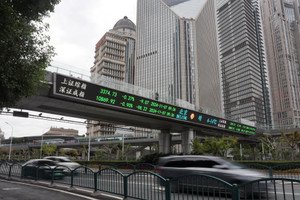
    This image shows a graph of the yuan's depreciation against the dollar, highlighting market expectations during Trump's presidency. It relates to the article's analysis of potential yuan depreciation and its economic implications.
    Graph illustrating yuan depreciation trends amidst Trump's presidency - Global Banking & Finance Review
    Why waste money on news and opinion when you can access them for free?

    Take advantage of our newsletter subscription and stay informed on the go!

    Subscribe

    Quick Summary

    China is expected to allow a gradual yuan depreciation as Trump imposes tariffs, balancing economic stability with trade competitiveness.

    Markets Expect China to Allow Yuan Depreciation Under Trump

    SINGAPORE (Reuters) - Financial markets are betting China will not use the yuan as a policy tool to offset expected U.S. tariffs in a second Donald Trump presidency, based on a view that sharp depreciation like that seen in his first term will be more harmful than helpful to the struggling economy.

    From the pricing of yuan forwards to interest rate derivatives and analysts' forecasts, indications are that China is already permitting a slow depreciation of the yuan to adjust to a broadly stronger dollar as it braces for Trump 2.0.

    But pricing also shows investors are expecting a gradual, moderate depreciation, with sell-side analysts seeing a 5-6% drop from current levels by year end.

    During Trump's first term as president, the yuan was allowed to weaken more than 12% against the dollar during a series of tit-for-tat U.S-Sino tariff announcements between March 2018 and May 2020.

    Trump has threatened tariffs of up to 60% on imports of Chinese goods during his second term beginning on Monday, though some reports suggest levies may be ramped up gradually.

    But things are different now, analysts say. The yuan is already weak, the economy is fragile, portfolio money has been leaving China, and its exports to America are a smaller proportion of its overall global trade, too small to justify a big devaluation.

    The yuan, or renminbi as it is also known, has been languishing near 16-month lows against the dollar for days and has fallen for three straight years. It was near record highs of 6.3 per dollar in 2018.

    Reuters reported last month that there are discussions in official circles about allowing it to fall to 7.5 per dollar, a roughly 2% drop from current levels.

    Most of that depreciation, though, will likely come a result of interest rate differentials between the U.S. and China, which have widened to about 300 basis points.

    The dollar is already elevated at current levels around 7.3 yuan, and "to break this level significantly higher is not realistic," said Ju Wang, head of Greater China FX and rates strategy at BNP Paribas.

    Wang pointed to how nearly half of China's $1 trillion trade surplus was with countries other than the United States, particularly neighbours such as Vietnam that have grown as hubs for finishing Chinese manufactured goods.

    In both the 2015 and 2019 periods of sharp yuan falls, China was forced to defend its policy and explain it was not engaging in any kind of beggar-thy-neighbour currency devaluation tactic. A cheaper exchange rate helps exporters by making their prices more competitive internationally.

    "There is a responsibility on China's side to keep the currency relatively stable because you still enjoy a fairly large trade surplus with the rest of the world. The world cannot take on a one-to-one adjustment in dollar-yuan against the tariff," said Wang.

    When asked about the yuan, the People's Bank of China (PBOC) told Reuters on Friday the country has sufficient foreign exchange reserves and more experience in responding to external shocks ... "so it has the confidence, conditions and ability to keep the renminbi exchange rate fundamentally stable at a reasonable equilibrium level".

    STABILITY IS KEY

    Domestic considerations about the sluggish economy also call for a stable financial system and currency so residents and businesses don't shift their savings abroad.

    Falling domestic bond yields and wobbly stock and property markets have hastened that rush to hoard dollars.

    "If the renminbi becomes a very unstable currency, people will try to convert it into U.S. dollars, buy gold, et cetera. Which is not what the PBOC wants," said Vincent Chan, China strategist at Aletheia Capital.

    While it has been difficult to interpret the PBOC's plans for the yuan, it has made every effort to contain the currency's weakness, so much so that it stays strong in trade-weighted terms.

    The trade-weighted CFETS yuan index, which measures the Chinese currency against a basket of 25 peers, remains near its highest level in over two years, showing the yuan so far remains slightly less competitive than currencies of its trading partners.

    Authorities have put a floor under falling domestic yields, including by suspending a bond purchase programme. They have encouraged companies to borrow abroad to attract more dollars home and the central bank has often fixed the yuan's trading band at a stronger level than market expectations.

    While China's leaders pledged in December to loosen monetary policy and take other steps to support economic growth in 2025, interest rate swaps show markets are pricing out the odds of rate cuts, because they think the PBOC will prioritise yuan stability.

    Alpine Macro's China strategist Yan Wang sees the 7.7 level in dollar/yuan as the upper limit for the PBOC, implying about a further 5% decline.

    "Yuan pressures in the near-term may be hard to avert," said Vishnu Varathan, head of macro research for Asia ex-Japan at Mizuho. "But it may be managed such that trade-weighted yuan stability is not unduly compromised."

    ($1 = 7.3317 Chinese yuan renminbi)

    (Reporting by Asia markets team; Editing by Vidya Ranganathan and Kim Coghill)

    Key Takeaways

    • •China is expected to allow a moderate yuan depreciation.
    • •Markets predict a 5-6% yuan drop by year-end.
    • •Trump's tariffs influence China's currency strategy.
    • •China aims to maintain economic stability amid external pressures.
    • •The PBOC has measures to stabilize the yuan.

    Frequently Asked Questions about Analysis-Markets are betting China will let yuan fall as Trump takes power, but not much

    1What is the main topic?

    The article discusses China's expected strategy of allowing a moderate yuan depreciation in response to potential U.S. tariffs under Trump.

    2How much is the yuan expected to depreciate?

    Markets and analysts predict a 5-6% depreciation of the yuan by the end of the year.

    3What is China's strategy regarding the yuan?

    China aims to allow a gradual depreciation while maintaining economic stability and avoiding sharp currency falls.

    More from Finance

    Explore more articles in the Finance category

    Image for US wants Russia, Ukraine to end war by summer, Zelenskiy says
    US wants Russia, Ukraine to end war by summer, Zelenskiy says
    Image for Russia launches massive attack on Ukraine's energy system, Zelenskiy says
    Russia launches massive attack on Ukraine's energy system, Zelenskiy says
    Image for Russia launched 400 drones, 40 missiles to hit Ukraine's energy sector, Zelenskiy says
    Russia launched 400 drones, 40 missiles to hit Ukraine's energy sector, Zelenskiy says
    Image for The Kyiv family, with its pets and pigs, defying Russia and the cold
    The Kyiv family, with its pets and pigs, defying Russia and the cold
    Image for Two Polish airports reopen after NATO jets activated over Russian strikes on Ukraine
    Two Polish airports reopen after NATO jets activated over Russian strikes on Ukraine
    Image for French miner Eramet's finance chief steps aside temporarily, days after CEO ouster
    French miner Eramet's finance chief steps aside temporarily, days after CEO ouster
    Image for Ukraine's Zelenskiy calls for faster action on air defence, repairs to grid
    Ukraine's Zelenskiy calls for faster action on air defence, repairs to grid
    Image for Goldman Sachs teams up with Anthropic to automate banking tasks with AI agents, CNBC reports
    Goldman Sachs teams up with Anthropic to automate banking tasks with AI agents, CNBC reports
    Image for Analysis-Hims' $49 weight-loss pill rattles investor case for cash-pay obesity market
    Analysis-Hims' $49 weight-loss pill rattles investor case for cash-pay obesity market
    Image for Analysis-Glencore to focus on short-term disposals as Rio deal remains elusive
    Analysis-Glencore to focus on short-term disposals as Rio deal remains elusive
    Image for Belgium's Agomab Therapeutics valued at $716 million as shares fall in Nasdaq debut
    Belgium's Agomab Therapeutics valued at $716 million as shares fall in Nasdaq debut
    Image for Big Tech's quarter in four charts: AI splurge and cloud growth
    Big Tech's quarter in four charts: AI splurge and cloud growth
    View All Finance Posts
    Previous Finance PostPrince Harry set for court battle with Murdoch papers
    Next Finance PostUK borrowing cost spike evaporates, in boost for Reeves